


If you’re an Indian professional waiting for your EB-1 green card, you’ve probably asked yourself more than once: When will EB-1 finally be current for India? It’s the question that echoes across WhatsApp groups, immigration forums, and coffee chats between colleagues working in the U.S. on H-1B or L-1A visas. Every month, thousands refresh the USCIS Visa Bulletin, hoping that their priority date will finally move forward — even just a little!
The EB-1 category, officially called the Employment-Based First Preference, was designed for individuals with extraordinary ability, outstanding professors and researchers, and multinational executives or managers.
In theory, it’s meant to be one of the fastest tracks to permanent residency. But for Indian nationals, the reality has been much more complex. High demand and country-specific limits have caused recurring retrogressions, turning what was once a quick process into a multi-year wait.
In 2025, things are shifting again. While the U.S. Department of State has hinted at better visa number availability, predictions remain mixed. Will the EB-1 category for India finally become current again — or will backlogs persist through another fiscal year?
In this guide, we’ll break down the numbers behind the Visa Bulletin, explain what drives priority-date movement, and share insights from immigration experts on what to expect next. Whether you’re currently in the U.S. maintaining status or abroad waiting for your immigrant visa interview, this article will help you plan your next steps with clarity and confidence.
Stay tuned — the answer might be closer than you think.
🧭 Understanding the EB-1 Category
When you hear “EB-1,” you’re talking about the top shelf of U.S. employment-based immigration. It’s the first preference category, meaning it gets priority when green cards are allocated each year. But what exactly does that mean for you — and why is it so sought after by Indian professionals aiming for permanent residency?
Let’s start simple. The EB-1 visa is divided into three main subcategories:
- EB-1A (Extraordinary Ability): For individuals who’ve reached the top of their field — think researchers with major citations, artists with international recognition, or tech innovators whose work has made headlines. The best part? You don’t even need an employer sponsor.
- EB-1B (Outstanding Professors or Researchers): Designed for academics who’ve produced significant research, published extensively, and have at least three years of teaching or research experience.
- EB-1C (Multinational Executives or Managers): For leaders in global companies who’ve worked in a managerial or executive role abroad and are transferring to a U.S. office of the same employer.
Now, here’s the kicker: even though EB-1 was meant to be “fast track,” demand from India skyrocketed over the past decade. Tech professionals moving up from H-1B to EB-1C, combined with scientists, engineers, and academics qualifying for EB-1A or EB-1B, have created a traffic jam in what used to be the express lane.
To make things even more complicated, the U.S. government limits the number of employment-based green cards issued each year per country. Once a nation hits its annual quota (and India almost always does), the extra cases pile up — that’s what causes retrogression in the Visa Bulletin.
Still, EB-1 remains a dream category because of its flexibility. Many applicants use it to bypass long EB-2 or EB-3 waits. It’s also more forgiving if you change employers or need to self-petition. And despite the backlog, EB-1 processing tends to move faster than other employment-based categories once the date becomes current.
In short: EB-1 is for the best and brightest — and India has a lot of them. But because of that, even this elite category faces delays. The key to navigating it is understanding how your priority date fits into the bigger immigration puzzle, which we’ll explore next when we break down how the Visa Bulletin actually works.
📊 How the Visa Bulletin Works
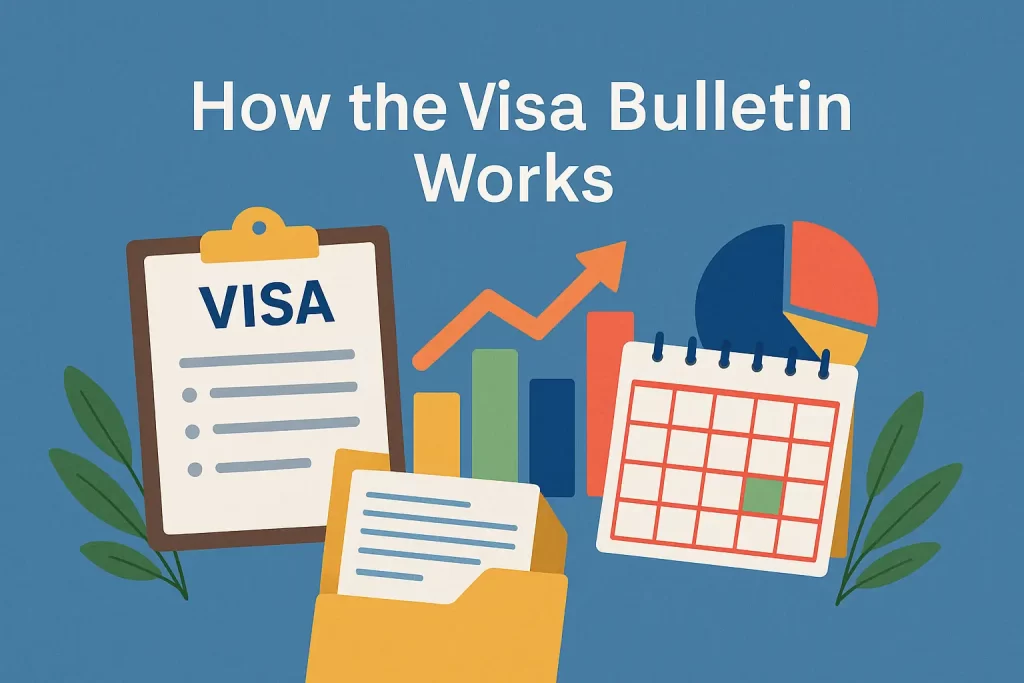
If you’ve ever tried to read the Visa Bulletin and felt completely lost, you’re not alone. It looks simple at first — just a few charts and dates — but understanding what those dates really mean can change how you plan your entire green-card journey.
Every month, both the U.S. Department of State (DOS) and USCIS release updates showing how many green cards are available for each employment-based category, and which priority dates are eligible to move forward. For Indian nationals under EB-1, those little shifts — even by a few weeks — can make your heart skip.
Here’s how it actually works: when your employer files your Form I-140, you get a priority date. Think of it as your place in line. The Visa Bulletin then tells you who’s currently being served at the immigration “counter.” If your date is earlier than what’s shown in the chart, congratulations — you’re current and can move on to the next step, like filing Form I-485 for adjustment of status.
Now, the tricky part is that there are two different charts each month:
- Final Action Dates (FAD): These show who’s actually getting approved for green cards right now.
- Dates for Filing (DFF): These let you file your I-485 a bit earlier — a sort of pre-approval queue.
USCIS sometimes alternates which chart you can use, depending on visa availability. When demand is high (like it usually is for India), the agency often sticks with the more conservative Final Action chart.
Why does all this matter? Because the Visa Bulletin reflects supply and demand. There are only about 140,000 employment-based green cards each year — and each country can only take up to 7 % of that total. When a country like India has far more qualified applicants than available spots, that’s when we see the dreaded retrogression — the dates move backward instead of forward.
Tracking the bulletin helps you predict trends and plan smart. Many professionals even set calendar alerts for the 15th of every month — when the new bulletin drops — just to see if their priority date finally appears.
Understanding these charts isn’t just about numbers; it’s about timing your future. Once you grasp how the Visa Bulletin functions, you can better strategize your next step — especially when we dive into why EB-1 retrogression keeps happening for India.
📉 Why EB-1 Retrogression Happens for India
Ah, the word retrogression — the one no EB-1 applicant wants to hear. You check the Visa Bulletin, see your date finally moving forward, and then… boom — next month, it’s back to 2019 again. Frustrating? Absolutely. But understanding why this happens can help you manage expectations and plan ahead strategically.
Let’s start with the basics. The U.S. immigration system uses annual limits for every green-card category. For employment-based visas, there are about 140,000 total visas each year, and each country can only receive up to 7% of that number. So no matter how many highly qualified professionals India produces, the law caps how many EB-1, EB-2, and EB-3 green cards can go to Indian nationals in a given year.
Now, here’s where things get interesting. The EB-1 category covers three groups: extraordinary-ability professionals (EB-1A), outstanding professors/researchers (EB-1B), and multinational managers/executives (EB-1C). For years, EB-1 was “current” worldwide — meaning there was no backlog at all. But around 2018, demand from India and China started to skyrocket, mostly driven by a wave of L-1A managers applying for EB-1C and H-1B professionals upgrading their petitions to EB-1A or EB-1B.
The result? Oversubscription. When the number of qualified applicants from India exceeds the yearly quota, retrogression happens — the cutoff date moves backward to control visa issuance.
There’s also a chain reaction from other categories. Sometimes unused visa numbers from family-based or lower employment preferences “spill over” into EB-1, helping the backlog shrink. Other times, when global demand spikes, there are fewer leftover numbers — causing retrogression again. Think of it as a see-saw between supply and demand.
The Department of State (DOS) often introduces retrogression toward the end of the fiscal year (September) to stay within legal limits, then readjusts at the start of a new one. This pattern is why you might see EB-1 India move forward early in the year, only to slide back later.
For Indian nationals, this cycle feels endless, but it’s not without hope. Understanding why retrogression occurs — per-country limits, spillover dependency, and shifting global usage — can help you make smarter decisions. Whether that means porting your priority date, exploring EB-2 NIW, or simply staying informed, knowledge truly is power here.
Up next, let’s dive into what everyone wants to know: the EB-1 predictions for India in 2025 — and whether there’s finally a light at the end of the backlog tunnel.
🔮 EB-1 Predictions for India 2025
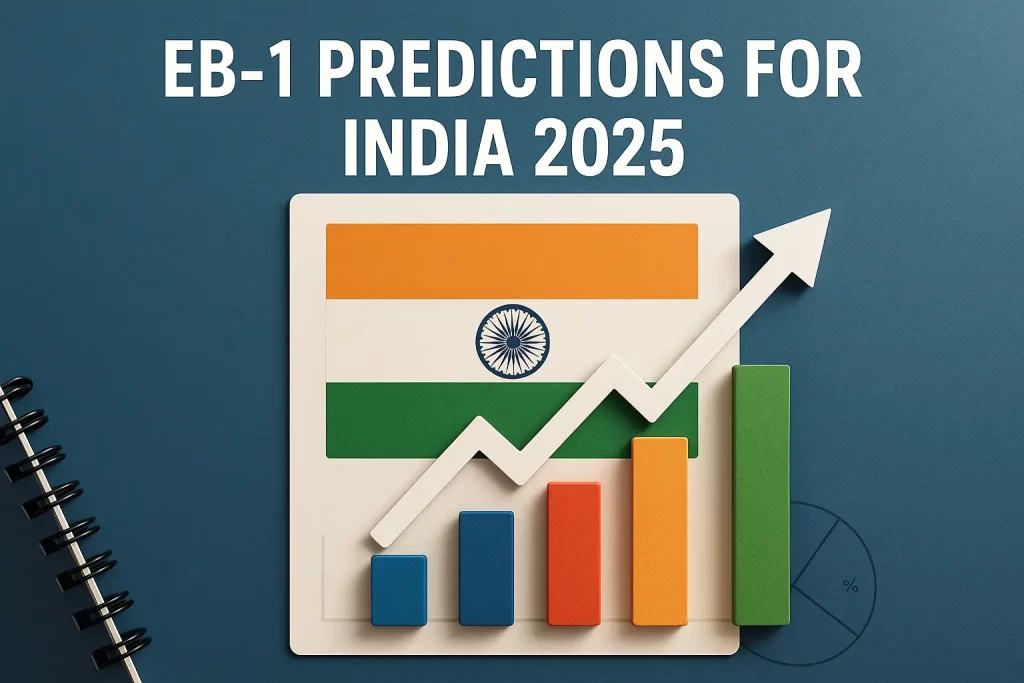
Everyone’s asking it: Will 2025 finally be the year EB-1 becomes current for India again? The short answer — maybe, but don’t hold your breath too tightly. The U.S. Department of State has hinted at modest improvements, but the backlog is still huge. Understanding the forces behind these predictions can help you plan better instead of just waiting on hope and rumors.
Each fiscal year starts with a fresh allocation of employment-based visas, and sometimes there’s a “spillover” from unused family-based visas that boosts the EB categories. In the last few years, those spillovers helped EB-1 briefly move forward — only to stall again when global demand caught up. For 2025, experts anticipate another small wave of improvement in the first half of the year, possibly pushing EB-1 India closer to mid-2022 priority dates.
That might not sound like a lot, but in the immigration world, even a few months’ movement means thousands of people finally becoming eligible to file their I-485s. The optimism comes mainly from a combination of two factors: fewer pending EB-1C petitions from multinational managers, and slightly higher visa number availability compared to last year.
Still, we have to stay realistic. Demand from Indian nationals remains the highest worldwide, and the 7% per-country cap continues to slow the system. Even when overall EB-1 demand falls globally, India’s queue alone keeps the category oversubscribed. Some immigration attorneys suggest that if fiscal year 2026 continues to see strong spillover, EB-1 India could finally become current — but that’s an “if,” not a “when.”
So, what can you do in the meantime? Stay proactive. Keep your I-140 approval valid, maintain lawful status on H-1B, H-4 EAD, or L-1, and have your I-485 documents ready in case the bulletin opens up suddenly. It happens more often than you’d think — a quick jump forward, then a freeze again. Being ready to file means you can seize the window immediately.
The best advice? Don’t get stuck on predictions alone. They’re useful, but the real power lies in preparation. Follow the Visa Bulletin releases each month, talk with your attorney about cross-chargeability options if applicable, and keep monitoring movement trends.
EB-1 for India might not be fully current this year, but small steps forward still matter. Momentum builds over time — and for many waiting in line, 2025 could be the year when the path finally starts to clear.
🧠 What You Can Do While Waiting

Waiting for your EB-1 green card to become current can feel like watching paint dry — slow, unpredictable, and sometimes nerve-wracking. But that doesn’t mean you’re powerless. In fact, this in-between time can be one of the most productive stages of your immigration journey if you know what to focus on.
First things first: maintain your lawful status in the U.S. That’s the golden rule. If you’re on H-1B, make sure extensions are filed on time and keep your paystubs and employment verification letters organized. If you’re on H-4 EAD or L-1A, stay alert to expiration dates and renewal timelines. Falling out of status — even by accident — can complicate your green-card process later.
Next, use this period to get your documents in perfect order. Think of it like pre-season training. Gather updated employment letters, tax records, publication lists, recommendation letters, and proof of continued achievements. USCIS loves consistency and clarity, so having everything ready means you can file Form I-485 the moment your priority date becomes current.
Another smart move? Monitor the Visa Bulletin every month. You’d be surprised how many people miss their window because they didn’t check. Mark your calendar for the 15th — that’s when the new bulletin usually drops. It’s also worth following immigration attorneys or firms on LinkedIn who analyze each update; their insights can save you from guesswork.
If you’re eligible, consider exploring cross-chargeability (using your spouse’s country of birth if it’s different and less backlogged). It’s one of the most overlooked strategies and can sometimes cut your waiting time by years.
And while it’s tempting to refresh USCIS trackers daily, balance that with self-care and planning for the future. Use this period to strengthen your professional profile — publish more, lead projects, or take on management roles that reinforce your EB-1 eligibility. The stronger your ongoing record, the safer your case stands against policy shifts or RFEs.
Lastly, stay in touch with your immigration attorney. A quick email update every few months ensures you won’t miss sudden filing opportunities or regulatory changes.
Waiting can be frustrating — but it’s also a chance to prepare like a pro. When that EB-1 date finally becomes current (and it will), you’ll be ready to move fast, file confidently, and turn your long wait into a smooth approval story.
💡 Conclusion
Waiting for the EB-1 category to become current for India can feel like an emotional roller coaster — a mix of hope, frustration, and cautious optimism. But if there’s one thing immigration teaches you, it’s patience and persistence. Every Visa Bulletin update, every small jump forward, is a reminder that progress — however slow — is still progress.
The EB-1 remains one of the most powerful pathways to a U.S. green card. It rewards talent, leadership, and innovation. And while India’s backlog continues to challenge even the most qualified professionals, movement is happening. Each fiscal year brings new visa numbers, new spillovers, and new opportunities to finally file that long-awaited I-485 adjustment of status.
So, don’t just wait — prepare. Keep your paperwork updated, maintain your lawful status, and build your professional profile stronger than ever. Because when that Visa Bulletin finally flashes your priority date, you’ll want to be ready on day one.
If you’ve made it this far in your immigration journey, you’ve already shown determination that most people never experience. Stay informed, stay connected with trusted immigration experts, and remember that every small step forward brings you closer to your goal — permanent residency in the United States.
It’s not a matter of if the EB-1 will be current for India again — it’s a matter of when. And when that day comes, your preparation, patience, and perseverance will finally pay off.
🔗 Further Links (for blog or video description)
Here are the most relevant reference links you can safely include under your video or blog post:
- U.S. Department of State Visa Bulletin — https://travel.state.gov/content/travel/en/legal/visa-law0/visa-bulletin.html
- USCIS Adjustment of Status Information — https://www.uscis.gov/green-card/adjustment-of-status
- Form I-140, Immigrant Petition for Alien Worker — https://www.uscis.gov/i-140
- EB-1 Eligibility Criteria (USCIS) — https://www.uscis.gov/working-in-the-united-states/permanent-workers/eb-1
- Priority Dates and Green Card FAQs — https://travel.state.gov/content/travel/en/us-visas/immigrate/numerical-limits.html