


You’ve got your Green Card—congratulations! 🎉 That little piece of plastic opens the doors to a life of opportunity in the U.S. But here’s the thing most people don’t realize: it also comes with a few fine-print rules, especially when it comes to traveling abroad. Whether you’re planning a quick family visit overseas or a year-long work assignment, knowing the travel rules for Green Card holders is absolutely essential to keep your lawful permanent resident (LPR) status safe.
Many new residents assume they can come and go freely—but the U.S. government sees long absences differently. In fact, spending too much time outside the country can lead to questions at the airport, or worse, the assumption that you’ve “abandoned your residency.” That’s why 2025 is the year to travel smarter, not just farther.
Think of this guide as your friendly compass through immigration law. We’ll break down how long you can stay abroad without losing your status, when to apply for a Re-entry Permit (Form I-131), what to expect at Customs and Border Protection (CBP) on your return, and the key documents that every permanent resident should carry when traveling internationally.
So before you pack your bags and renew your passport, let’s make sure your Green Card travels just as safely as you do. 🌎✈️ After all, the world is waiting—but your home is still the U.S., and it’s worth protecting every step of the way.
✈️ Understanding Your Travel Rights as a Green Card Holder
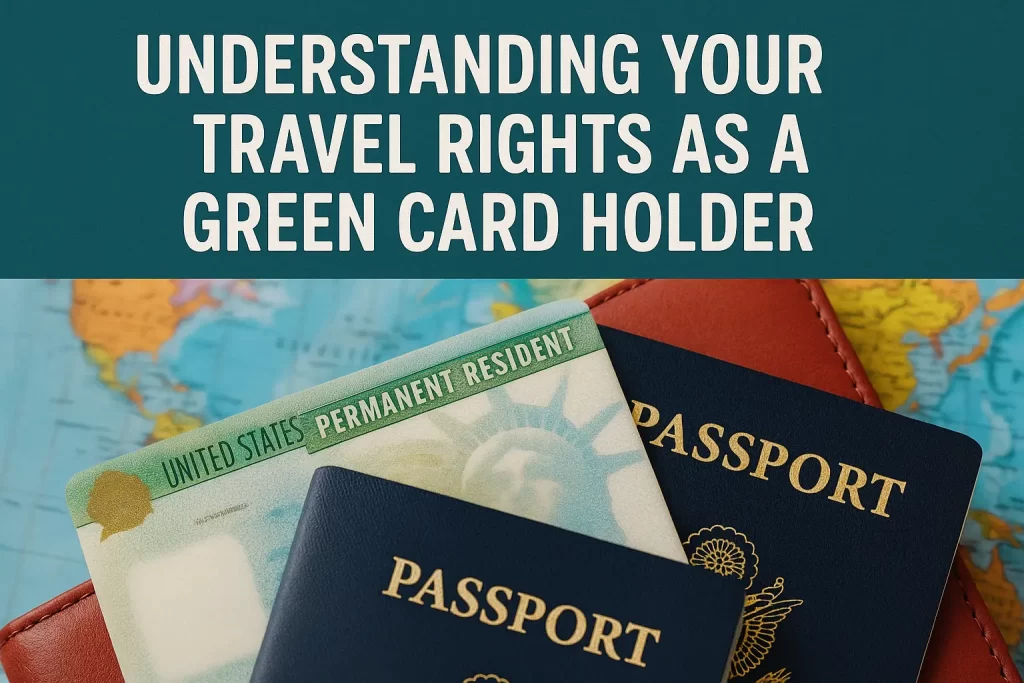
So here’s the thing — having a Green Card doesn’t mean you can hop on a plane and disappear for months without a second thought. Sure, it gives you lawful permanent resident status in the U.S., but that word “permanent” actually means something: you’re expected to live here, not just visit. A lot of Green Card holders misunderstand that part, and that’s where problems begin.
Let’s get real for a second. When you leave the U.S., immigration officers expect you to come back with the clear intention of keeping America as your home. They look at everything — where your family lives, your job, your home address, even your bank account activity. If all signs point to you living abroad more than in the U.S., that can raise red flags at Customs and Border Protection (CBP).
Think of your Green Card like a long-term membership card. It gives you rights, yes — to live, work, and travel — but those rights come with responsibilities. You have to show that your ties to the U.S. are active and genuine. For example, if you travel for less than six months, you’re generally good. But once your trips stretch longer — say, seven months or a year — the government might start asking questions like, “Are you still a resident here, or did you move abroad?”
Here’s another tip many people overlook: you must carry your Green Card at all times when traveling abroad. It’s not just your ID; it’s proof of your U.S. status. And when you re-enter the U.S., it’s what gets you past the CBP officer’s booth. If your card is lost, damaged, or expired while you’re away, it can complicate your return — sometimes requiring a boarding foil or temporary travel document issued by a U.S. consulate abroad.
Also, not all Green Card holders are the same. Some are conditional residents, which means their status is valid for two years and must be renewed before it becomes permanent. If you’re in that category, traveling without ensuring your conditions are met can be risky.
So, before you plan that overseas trip, ask yourself: “Do I still look like I live in the U.S. on paper?” If the answer is yes — great, pack your bags. If not, fix it first. Remember, CBP officers don’t just stamp passports; they read stories. Make sure yours says, I live in the U.S., and I’m just visiting the world. 🌎
🛂 Duration Limits and Risk of Abandoning Residence
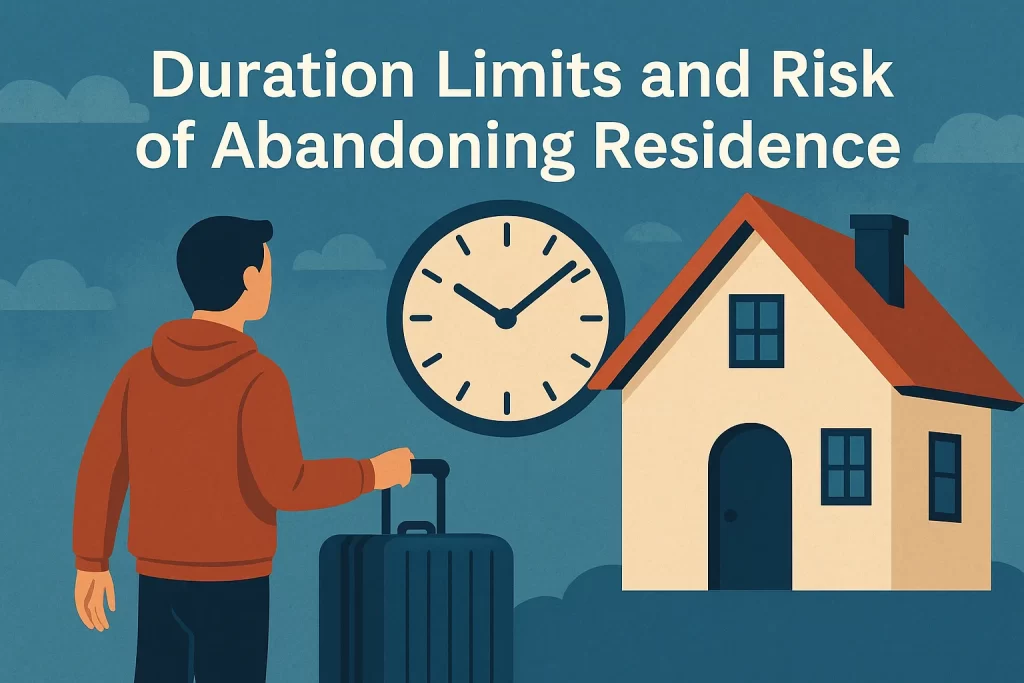
Let’s clear this up right away — time matters when you’re a Green Card holder traveling abroad. It’s not just about where you go, it’s how long you stay. The U.S. immigration system keeps a close eye on absences, and staying away too long can make it look like you’ve quietly traded your U.S. life for another one.
If your trip is less than six months, you’re usually safe. CBP officers might ask a few standard questions about your trip, but you’ll almost always pass through without issue. It’s when you cross that six-month mark that things start to get tricky. A trip that lasts between six months and one year can raise suspicion — officers might wonder if you’re still truly “residing” in the U.S. or if you’ve slowly moved your life somewhere else.
Now, if you stay abroad for more than one year, it’s officially considered a break in your residency. That means your Green Card can be viewed as abandoned, unless you took steps in advance — like applying for a Re-entry Permit (Form I-131) before leaving. Many people make the mistake of assuming that because they still pay U.S. taxes or own a home, they’re fine. Unfortunately, it doesn’t work like that. The immigration officer at the airport doesn’t look at your tax forms first; they look at your pattern of living.
Here’s a story I’ll never forget: a friend of mine traveled abroad to take care of her sick mother. She planned to stay for three months but ended up staying eleven. When she finally returned, the CBP officer questioned her for nearly an hour, asking about her job, her lease, even her doctor’s appointments in the U.S. She was lucky — they let her in with a warning. But that moment taught her (and all of us) that intent alone isn’t enough; you need proof of continuous ties.
So how do you protect yourself? Simple:
- Keep trips under six months whenever possible.
- If you know you’ll be away longer, apply for a Re-entry Permit before you leave.
- Maintain your U.S. mailing address, bank accounts, and health insurance active while abroad.
- Avoid doing things that suggest you’ve “moved” — like enrolling kids in foreign schools or working full-time overseas.
Remember, the government isn’t trying to stop you from seeing the world — they just want reassurance that the U.S. is still your home base. 🌎 Think of it as leaving the door open but keeping your suitcase packed to come back.
📄 Re-Entry Permits and Advance Planning
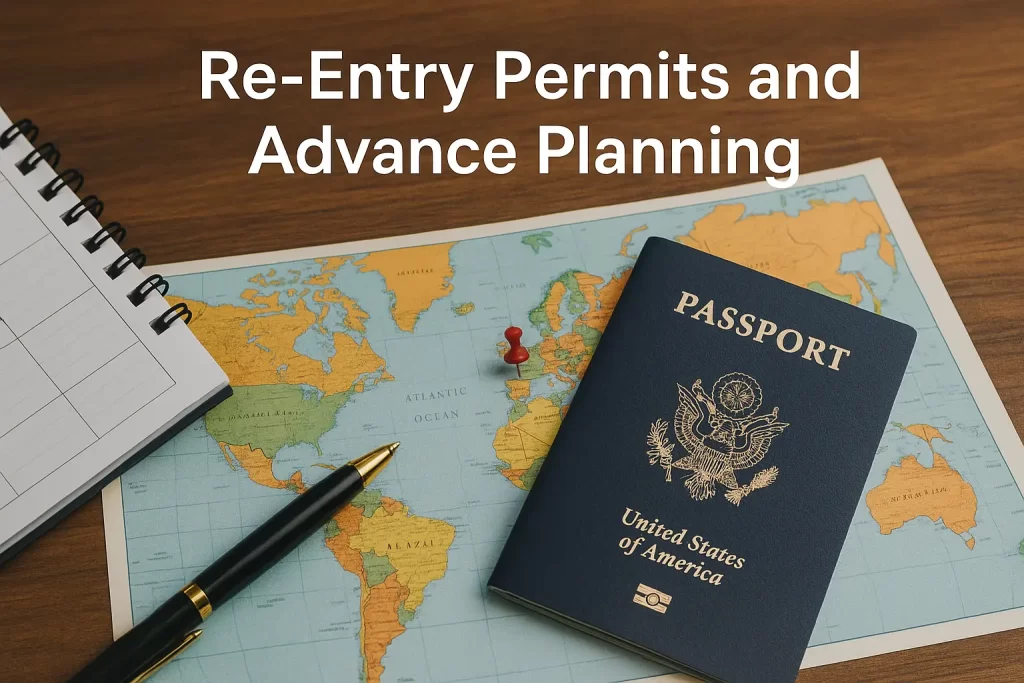
Here’s the truth no one tells you when you first get your Green Card: the re-entry permit is your lifeline if you ever plan to be out of the U.S. for an extended period. Think of it like a “permission slip” that says, Hey, I’m not abandoning my residency — I’ll be back.
A Re-entry Permit (Form I-131) allows you to stay outside the U.S. for up to two years without losing your permanent resident status. But there’s a catch — you have to apply before you leave the country. Once you’re abroad, it’s too late. USCIS won’t process it from outside the U.S., so timing really is everything.
Let’s say you know you’ll be taking a long work contract overseas, or maybe caring for a loved one back home. That’s when the re-entry permit becomes your best friend. You file Form I-131 with USCIS, attend a quick biometrics appointment, and then wait for approval. The process can take anywhere from 6 to 12 weeks, depending on the service center. Pro tip? Apply at least three months before your planned travel if possible.
Here’s how it helps:
- It officially tells USCIS that you intend to return.
- It protects you from accusations of abandoning residency during long absences.
- It makes re-entry at the airport way smoother — CBP officers will see your permit and know you followed the rules.
A lot of people confuse a re-entry permit with a travel document or advance parole, but they’re not the same thing. Advance parole is for those waiting for a Green Card (like adjustment of status applicants), while the re-entry permit is for existing Green Card holders.
I’ve seen travelers skip the permit thinking their Green Card alone was enough — then get stuck abroad for months trying to re-establish their status. Don’t risk that. Filing the I-131 might feel like an extra chore, but it’s worth every bit of paperwork when your return to the U.S. is smooth and stress-free.
And one more tip: keep a copy of your permit scanned in your email or phone. If you lose the original while abroad, it’ll be much easier to prove your intent to return and request a replacement.
Bottom line? Plan ahead. The U.S. immigration system rewards preparation. A re-entry permit isn’t just a form — it’s peace of mind for Green Card holders who love to travel. 🌎
🌍 Essential Documents to Carry When Traveling Abroad

Alright, let’s get practical. Before you even think about airport outfits or duty-free snacks, make sure your travel documents are in order. For Green Card holders, what you pack on paper is just as important as what you pack in your suitcase. One missing document can turn a smooth trip into a stressful airport interrogation.
First things first — your Green Card. It’s your golden ticket back into the United States. Never, ever travel without it. If you lose it while abroad, getting back in becomes complicated. You’ll have to visit a U.S. consulate and apply for something called a boarding foil — basically a temporary travel authorization that lets you board your flight home. That process takes time, money, and a lot of patience.
Next, your passport. Even though you’re a lawful permanent resident of the U.S., you still need to carry a valid passport from your country of citizenship. Think of the Green Card and passport as a team — one shows where you’re from, the other proves where you belong. Together, they make border crossings a breeze.
Now, let’s talk about supporting documents — the underrated heroes. These include things like:
- A copy of your re-entry permit (if you’ve got one).
- Your U.S. address and proof of residence (like a lease, utility bill, or driver’s license).
- Employment verification or pay stubs showing ongoing ties to the U.S.
- Travel itinerary and return ticket — these help show your intent to come back.
I once met a traveler at customs who got pulled aside because he’d been abroad for seven months. The officer wasn’t convinced he still lived in the U.S. But when he pulled out proof of his apartment lease, his work schedule, and his re-entry permit copy, the officer smiled and waved him through. It’s those small details that make a big difference.
If you’re traveling with family, make sure everyone’s documents are valid and organized — especially kids with conditional Green Cards. And always check expiration dates well before your trip. Nothing hurts like realizing your Green Card expires next week while you’re boarding a flight to Europe.
Lastly, keep digital copies of everything — your Green Card, passport, permit, ID, even your flight confirmation — saved securely in your phone or cloud storage. If something gets lost or stolen, you’ll have immediate proof of identity.
In short: documents are your defense. Immigration officers don’t know your story — they only see your paperwork. Make sure it tells them exactly what they need to see: you’re a Green Card holder, you’ve planned responsibly, and you’re coming home. 🛂
💼 Special Cases: Students, Workers, and Tax Residents
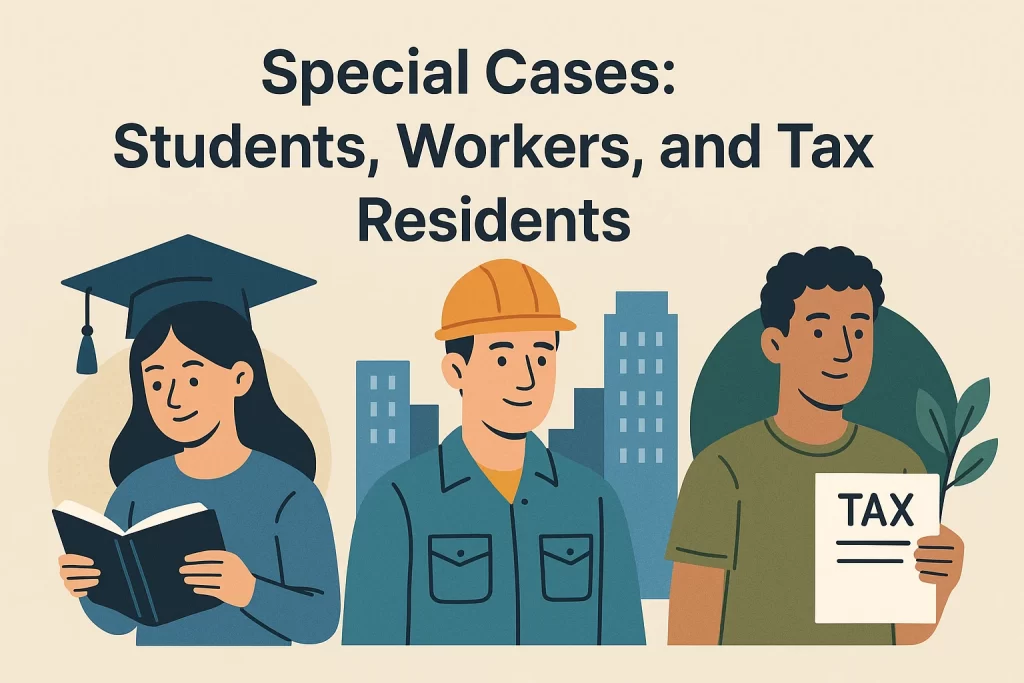
Here’s where things get a little more complex. Not all Green Card holders travel for leisure — many do it for life reasons: studying abroad, temporary work assignments, or even caring for family. And while these reasons are perfectly valid, they can blur the line between temporary travel and residency abroad in the eyes of U.S. immigration.
Let’s start with students. If you’re a Green Card holder planning to study overseas, make sure your program is short-term or clearly defined. Universities abroad often have multi-year programs, and if you stay enrolled full-time without returning to the U.S. for extended periods, CBP officers might question whether you’ve “moved.” To stay safe, return home for holidays or breaks whenever possible, keep your U.S. mailing address active, and file your U.S. tax returns every year. That tax record shows you still consider America home.
Now, workers — maybe your company sends you on an international assignment or relocation. That’s where a Re-entry Permit (Form I-131) is essential. It’s your official declaration that your move is temporary. Also, maintain proof that your employer is U.S.-based and that your salary still runs through a U.S. account. Small details like those help prove your ties. Some companies even provide letters confirming that your work abroad is temporary — gold at the border if questions come up.
Then there’s the tax angle, which many people underestimate. As a Green Card holder, you’re considered a U.S. tax resident, no matter where you live or earn money. That means you must report worldwide income to the IRS. Forgetting this can hurt you later — not only with taxes but also with your immigration record. The U.S. government takes “maintaining residency” seriously, and tax compliance is one of the clearest signs of ongoing intent to remain a U.S. resident.
A friend once told me how she nearly lost her status because she worked remotely from abroad for over a year and didn’t file taxes. When she came back, CBP noticed the gap, and it took months of paperwork and legal help to fix. That’s why I always say: it’s not just about how long you’re gone — it’s about what you do while you’re gone.
So if you’re studying, working, or living abroad temporarily, keep your ties strong and visible:
- File U.S. tax returns every year.
- Maintain U.S. bank and credit accounts.
- Keep your address active and your driver’s license valid.
- Visit the U.S. at least once a year, if possible.
Bottom line? Even if you’re halfway across the world, make sure your life still lives in America on paper. That’s how you protect your Green Card — and your peace of mind. 🌎
🧳 Travel Tips to Keep Your Green Card Safe
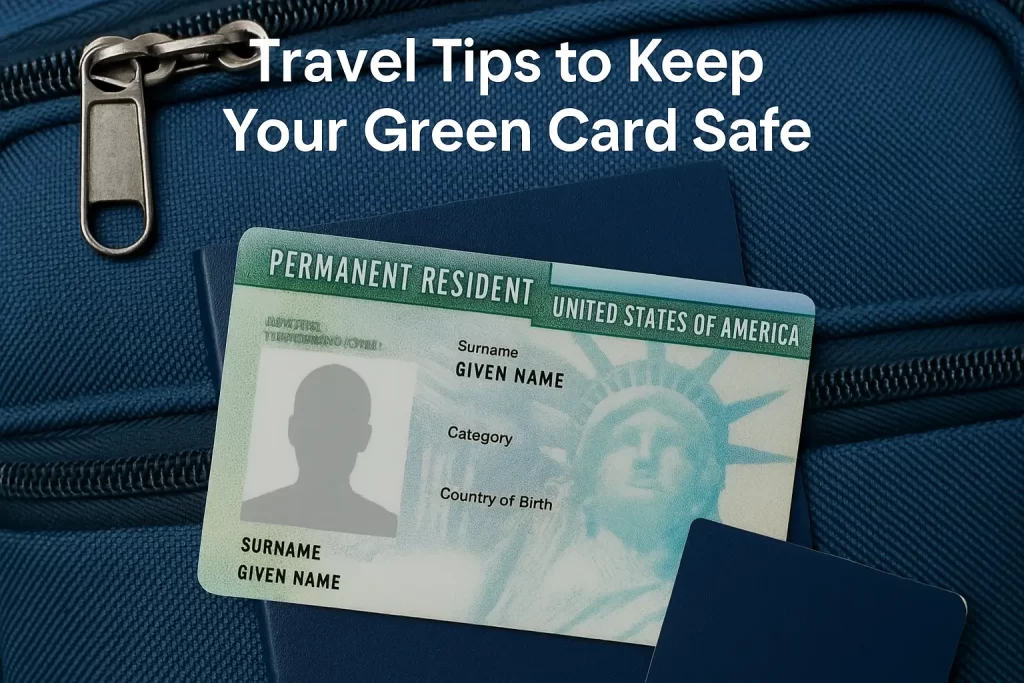
Let’s be honest — travel can get chaotic. Between flight delays, lost luggage, and jet lag, the last thing you want is to deal with Green Card problems at the airport. That’s why a little planning before you travel can save you a lot of stress later. These aren’t just “nice to do” tips — they’re small habits that keep your Green Card safe and your re-entry smooth.
First rule: make copies of everything. I mean everything — your Green Card, passport, travel insurance, flight itinerary, and re-entry permit (if you have one). Keep one copy with you (in a different bag than the originals) and another saved digitally — like in your email or cloud storage. If anything gets lost or stolen, those copies can be a lifesaver at a U.S. embassy or consulate.
Second: check your card’s expiration date. You’d be surprised how many people realize at the airport that their Green Card is expiring in two weeks. If your card will expire within six months, renew it before you go. Otherwise, you might not be allowed to board your flight home — airlines are strict about this.
Third tip — don’t overstay. If you’re planning a long trip, set a reminder for your return date. Trips under six months are safest; anything longer than that, especially past one year, can trigger questions or even require a re-entry permit. Think of it like an invisible timer that starts ticking the moment you leave U.S. soil.
Here’s a real-life moment that stuck with me: a colleague once went to visit her family in her home country and ended up staying eight months instead of three. When she returned, CBP officers asked if she still had a job or home in the U.S. Luckily, she had copies of her lease, pay stubs, and proof of return intent. Without those, she could’ve been flagged for abandoning her status.
Another key point — keep your contact info updated. If you move houses, change your phone number, or switch jobs, update USCIS through Form AR-11. It’s quick, and it ensures you don’t miss critical notices, especially about card renewals or travel documents.
And please — don’t lend your Green Card or make photocopies for anyone who doesn’t need them. Treat it like your passport: private, personal, and valuable.
Finally, be mindful when passing through customs abroad. Some countries may stamp or record your U.S. residency status. Always present your documents confidently and keep your answers consistent — you’re a U.S. resident traveling temporarily, not moving abroad.
When you travel prepared, you travel free of anxiety. 🌍✈️ Keep your documents close, your digital copies safe, and your plans realistic — because keeping your Green Card protected means keeping your U.S. future secure.
📅 Returning to the U.S.: What to Expect at Customs and Border Protection

Coming home after a long trip always feels good — until you hit the immigration line. That’s where every Green Card holder realizes that re-entry is more than just a stamp. It’s a checkpoint where you have to show, not just say, that you’ve kept your life rooted in the United States.
When you arrive at Customs and Border Protection (CBP), the officer will first check your passport and Green Card. They’ll scan your documents, look at your travel history, and — depending on how long you’ve been abroad — might ask a few questions. Typical ones sound like:
- “How long were you outside the U.S.?”
- “What was the purpose of your trip?”
- “Where do you live in the U.S.?”
- “Do you still work there?”
Don’t panic — they’re not trying to intimidate you. They’re simply confirming that you didn’t abandon your residency. The key here is confidence and consistency. If you’ve kept your U.S. address, bank accounts, and job active, you’ve got nothing to worry about.
Now, if you’ve been gone for six months or more, expect a few extra questions. CBP might send you to secondary inspection — a separate area where they take a closer look at your situation. It sounds scary, but it’s not the end of the world. They may ask for proof of your U.S. ties — things like your lease, pay stubs, tax filings, or even your kids’ school records. Having those documents handy can make this process smooth and quick.
If you’ve been outside the U.S. for over a year without a re-entry permit, it’s trickier. You might be asked to apply for a Returning Resident Visa (SB-1) before you come back — a lengthy and uncertain process. That’s why it’s so important to plan travel ahead and never assume you can just “explain it later.”
Also, don’t forget customs declarations. You’ll need to declare items you bought abroad — gifts, electronics, even certain foods. Green Card holders are still U.S. residents, which means U.S. tax and customs laws apply to you, just like any citizen. Declaring everything honestly avoids penalties and shows transparency.
I remember one guy at LAX who tried to breeze through after a nine-month stay overseas. The officer noticed he hadn’t filed U.S. taxes in years. That one conversation spiraled into hours of questioning — all because of poor preparation.
So when you land, breathe, smile, and be ready. You’re not being tested — you’re just proving what’s true: that the U.S. is still your home. Bring your documents, tell the truth, and keep your story straight.
Re-entry isn’t just about crossing a border; it’s about reaffirming your commitment to your life in America. 🌎
⚖️ Common Mistakes That Lead to Problems

Let’s face it — most Green Card issues at the border don’t come from bad intentions, but from small mistakes that snowball into big problems. It’s easy to think, “I’m a permanent resident, I can come and go whenever I want.” But that’s exactly the mindset that can get you flagged at re-entry or, worse, put your residency at risk.
The first — and biggest — mistake is staying abroad too long. Many people underestimate how strict the U.S. government is about residency continuity. Staying outside the U.S. for over one year without a Re-entry Permit is often treated as abandonment of residence. Even stays over six months can trigger questions. Remember, the U.S. wants to see that your life is based here — job, family, taxes, home, everything.
The second mistake? Not filing U.S. taxes. A lot of Green Card holders skip filing if they’ve earned income abroad, thinking it doesn’t count. Wrong. As a permanent resident, you must report worldwide income to the IRS, even if you also pay taxes in another country. Missing returns sends the message that you no longer consider the U.S. your main home — and CBP officers notice that pattern.
Another common blunder is using a foreign address for official purposes — on bank accounts, job applications, or USCIS forms. That’s a red flag that you may be living elsewhere. Always use your U.S. mailing address for anything tied to your identity, even if you’re temporarily abroad.
Then there’s the “I’ll renew it later” trap. Traveling with an expired or soon-to-expire Green Card can cause huge headaches. Airlines might not let you board, and you could face long processing delays on return. Always check expiration dates months in advance.
One more thing: some people get too comfortable traveling on foreign passports, ignoring the fact that their Green Card must be presented when re-entering the U.S. It’s not optional — it’s proof of your lawful status. Without it, you’re technically an “alien without documentation,” and that’s not a phrase you want on your record.
And finally — failing to document intent. It might sound strange, but sometimes all it takes to prove you didn’t abandon your residency is showing you meant to come back. Keep records of rent payments, tax filings, family ties, even flight bookings.
Here’s the bottom line: immigration officers don’t know your story — they see your paperwork, your timeline, and your choices. Mistakes like missed taxes, expired cards, or long absences tell the wrong story. So stay proactive. Check your documents before you fly, keep your U.S. life active, and treat every trip like it’s temporary — because that’s exactly what the law expects.
Protect your status, and you’ll protect your freedom to travel anywhere in the world 🌎 — with peace of mind waiting for you back home.
🏡 How to Maintain U.S. Ties During Long Trips
This part might surprise you — keeping your U.S. ties alive while you’re abroad is one of the most powerful ways to protect your Green Card. You don’t need to be physically in the U.S. every day to show that you still belong here. What matters is proof: your actions, your records, your consistency. They all tell the story that America is still home. 🇺🇸
Start with the basics — your U.S. address. Don’t give it up just because you’re going abroad for a few months. Keep your lease, even if it means subletting your space or keeping a family member’s name tied to it. Immigration officers often ask, “Where do you live in the U.S.?” — and having a stable address makes that answer easy.
Next, keep your bank accounts and credit cards active. Using your U.S. financial institutions while abroad shows continuous connection. Make small transactions, keep savings here, and if possible, have your salary or freelance income still paid into a U.S. account. It signals that you’re financially rooted in the States, not starting over somewhere else.
Then there’s health insurance — something many travelers forget. Letting it lapse sends the wrong message. Keeping an active plan, even a basic one, shows you still intend to return. It’s one of those subtle but strong ties that CBP officers notice when they review your case.
And don’t skip U.S. tax filing — even if you earned income abroad. The IRS doesn’t care where your paycheck came from; as a Green Card holder, you must file every year. Filing proves not only compliance but commitment. It’s one of the clearest indicators of residency intent.
If you’re gone for a long trip — say, six months or more — consider keeping personal items in storage, maintaining your driver’s license, and keeping a phone number registered in the U.S. Even something small like maintaining a Netflix subscription tied to your U.S. address reinforces the paper trail that you’re still based here.
One client once told me he thought “U.S. ties” just meant having family in the country. Nope — it’s much broader. It’s about proving that your life, in all its details — your finances, your taxes, your home — still revolve around America.
And if you’re married to a U.S. citizen or have kids in school here, even better. Family ties are among the strongest factors immigration looks at when deciding whether you’ve abandoned residency.
At the end of the day, maintaining your ties isn’t just a legal move — it’s emotional, too. It’s a way of saying, I may travel, but I always come back home. 🌍
So wherever your journey takes you, keep your roots planted and your paperwork proof ready. Because travel doesn’t mean distance — not when you carry your ties with you.
🌟 Conclusion
Traveling as a Green Card holder isn’t just about booking flights and chasing sunsets — it’s about balancing freedom with responsibility. Your Green Card gives you the incredible privilege to live and work in the United States, but it also asks for one thing in return: that you keep your home base here. Every trip abroad — whether for family, study, work, or leisure — should reflect that truth.
By now, you know the essentials. ✅ Keep your absences short when possible. Apply for a Re-entry Permit (Form I-131) if you’ll be gone longer than a year. Carry the right travel documents every time you fly. File your U.S. taxes no matter where you are. And most importantly, maintain strong ties — your address, your accounts, your commitments, your life.
It might sound like a lot to remember, but it all comes down to one idea: intent. Show that your intent is to live in the U.S., and the law will protect your right to return. That’s the golden rule of all travel rules for Green Card holders.
I’ve seen too many people lose their status not because they broke a law, but because they didn’t plan ahead — or didn’t realize how seriously “residency” is interpreted. Don’t let that happen to you. With the right preparation, you can explore the world freely, reconnect with loved ones, and still come home to the country you’ve built your life in. 🌎
So go ahead — travel wide, but stay grounded. Carry your documents, keep your ties, and remember: your journey starts and ends with the same destination — home.
🔗 Further Reading / Related Resources
Official U.S. Government Sources
- USCIS – International Travel as a Permanent Resident
- USCIS Form I-131 – Application for Travel Document (Re-entry Permit)
- U.S. Customs and Border Protection (CBP) – Arrival Procedures for LPRs
- IRS – Tax Responsibilities of U.S. Residents Abroad
- Department of State – Returning Resident (SB-1) Visa Information
Helpful Guides & Insights
- Maintaining Your Green Card While Traveling Abroad – Boundless Immigration Guide
- Green Card Renewal and Re-entry Tips – CitizenPath Blog
- CBP Traveler Entry FAQs – U.S. Customs Help Center
- How to Apply for a Re-entry Permit – Simple Citizen
- IRS Publication 54 – Tax Guide for U.S. Citizens and Resident Aliens Abroad
Internal Links (for your own site SEO, if applicable)
- ✅ How Long Does It Take to Get a Green Card in 2025?
- ✅ Top USCIS Forms Every Immigrant Should Know
- ✅ Marriage-Based Green Card Interview Questions (2025)
- ✅ U.S. Citizenship Timeline for Green Card Holders
- ✅ How to Expedite a USCIS Case in 2025