


“Are you really ready to marry?” That’s the heart of every K1 fiancé visa interview. In 2025, consular officers are taking a closer look at couples to make sure relationships are genuine and not just for immigration purposes. This moment can feel nerve-wracking, but it’s also the final big step before you and your partner can start your life together in the United States. 🌎
During the interview, the officer isn’t just reviewing documents — they’re looking at the story behind your relationship. How did you meet? How do you stay in touch? What are your wedding plans? Even small questions, like what your fiancé’s favorite food is or when you last saw each other, can come up. Under pressure, those “easy” details suddenly feel harder than you’d think.
That’s why preparation is everything. In this guide, we’ll break down the most common K1 visa interview questions in 2025, the documents you’ll need to bring, and the red flags officers watch for. You’ll also get sample questions and tips to help you answer confidently, so you walk into your interview ready to prove what matters most: your relationship is real. 💕
🗂️ Documents Required for a K1 Visa Interview
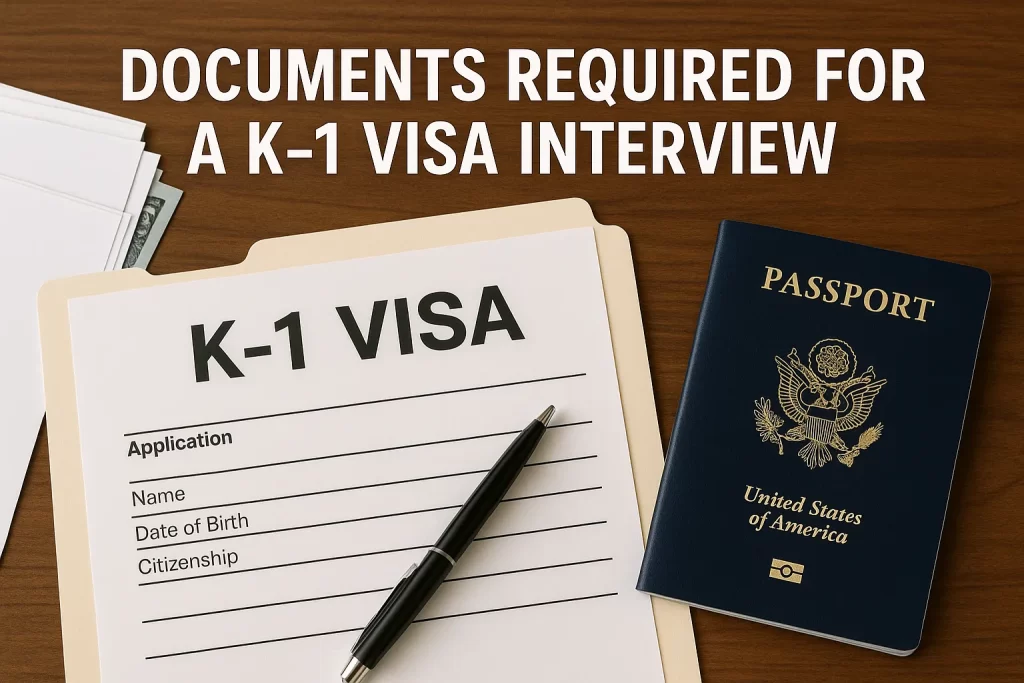
Showing up without the right paperwork can cause delays — or even a denial. In 2025, U.S. embassies and consulates are extra strict about having everything neatly prepared. Think of your documents as the “receipts” of your relationship and your eligibility. 📑
Here’s what you must bring:
- Valid passport → Must be valid for at least six months beyond your intended stay in the U.S.
- Form I-129F approval notice → The official Notice of Action (NOA2) proving USCIS approved your petition.
- DS-160 confirmation page → The online nonimmigrant visa application form you filled out for the K1 visa.
- Visa appointment confirmation → Proof of your scheduled interview date.
- Medical exam results → Sealed envelope from an embassy-approved physician (do not open it). 🩺
- Police certificates → From every country where the applicant has lived for six months or more since age 16.
- Proof of ongoing relationship → Photos, call logs, video chat screenshots, emails, boarding passes, hotel receipts, gifts exchanged — anything that shows your relationship is real. 📸
- Evidence of intent to marry within 90 days → Wedding plans, venue reservations, guest lists, or even written statements of intent.
- Financial support documents → Form I-134 (Affidavit of Support), petitioner’s tax returns, W-2s, or recent pay stubs.
💡 Pro tip: Organize documents in a binder with labeled sections. It not only makes it easier for the officer to review but also shows you’re prepared and serious.
👉 Remember, incomplete paperwork is one of the most common reasons K1 visa cases get delayed. Double-check your embassy’s website too, as requirements can vary slightly by country.
💬 Common K1 Fiance Visa Interview Questions in 2025
This is the part most couples worry about — the actual questions. In 2025, consular officers are sticking to the classics but often ask follow-ups to catch inconsistencies. Some questions are personal, others are routine. The goal is simple: prove that your relationship is genuine.
Here are the main categories of questions you can expect:
👫 Relationship History
- How did you and your fiancé(e) meet?
- When did your relationship become serious?
- How many times have you met in person?
- What trips have you taken together?
💬 Daily Communication
- How often do you talk to each other?
- Do you video call, chat, or email?
- Who usually initiates the conversations?
- What language do you communicate in?
👨👩👧 Family & Background
- Have you met your fiancé(e)’s parents or family?
- What do they think of your relationship?
- Do you know your fiancé(e)’s birthday and place of birth?
- What does your fiancé(e) do for work?
💒 Wedding Plans
- When and where is the wedding planned?
- Who will attend?
- Have you made arrangements for the venue, dress, or invitations?
- What will you do if the visa is delayed?
⚠️ Red Flag or “Trick” Questions
- What is your fiancé(e)’s favorite food? 🍕
- What side of the bed does your fiancé(e) sleep on?
- Have either of you been married before? If yes, what happened?
- How do you plan to support yourselves financially in the U.S.?
💡 Pro tip: Don’t stress about remembering every little thing. Officers want consistency and authenticity, not perfect memory. A genuine relationship shows through natural answers.
👉 If your story is real and your answers line up with your fiancé(e)’s, you’ll be fine — even if you forget the color of their toothbrush. 🪥
⚠️ Red Flags Consular Officers Look For
Not every couple walks into the K1 interview on equal ground. Consular officers are trained to spot “red flags” — details that may suggest a relationship is not genuine. Knowing these in advance helps you prepare honest explanations and avoid surprises. 🚨
Here are the most common red flags in 2025:
- Inconsistent answers → If your responses don’t match your fiancé(e)’s, even on small details, it may raise suspicion.
- No in-person meetings → U.S. law requires at least one in-person meeting within the past two years (with few exceptions). Not having this is a huge red flag.
- Short or rushed engagements → Meeting and deciding to marry within weeks or months can look suspicious unless there’s strong evidence or cultural context.
- Large age gaps → Significant differences in age aren’t automatically a problem, but officers may dig deeper for proof of a genuine relationship.
- Language or cultural barriers → If couples don’t share a common language or have trouble communicating, the officer may question how the relationship works.
- Prior visa denials or immigration history → Past overstays, denials, or petitions for other partners can make officers more cautious.
- Lack of supporting evidence → Few photos, no travel history, or minimal proof of communication can weaken your case.
💡 Pro tip: A red flag doesn’t mean denial. It just means the officer will ask tougher questions. Be ready with clear, calm explanations and solid evidence of your relationship.
👉 The best defense against red flags is honesty and preparation. If something looks unusual on paper, your story and supporting proof can clear it up.
🎯 Tips to Answer K1 Interview Questions Confidently
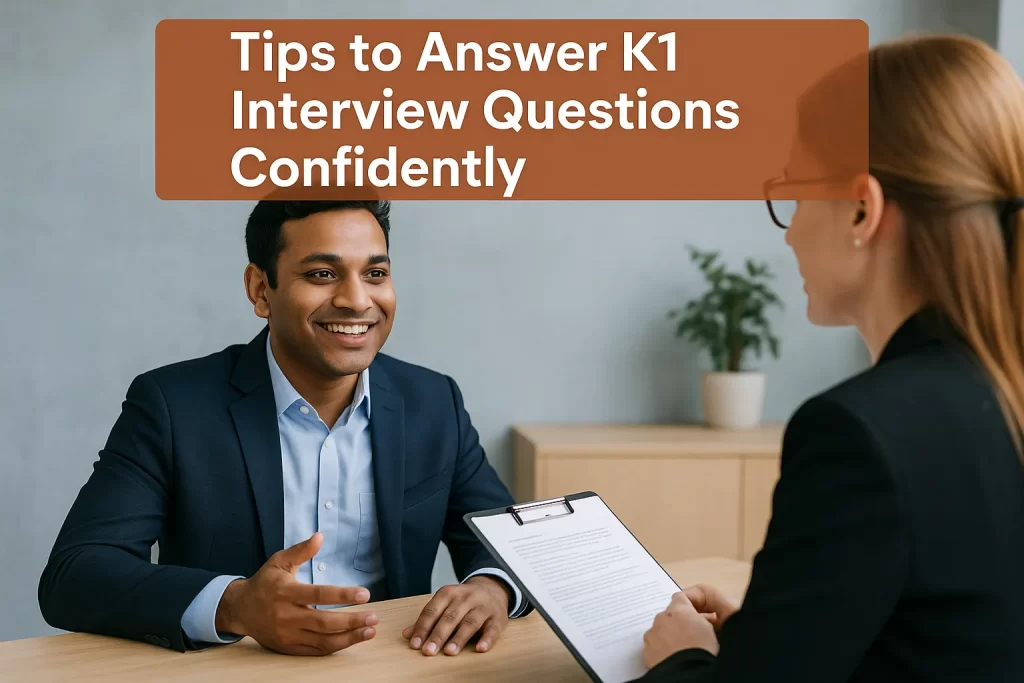
Walking into your K1 fiancé visa interview can feel like stepping onto a stage 🎤. Even if your relationship is real, nerves can make you stumble. The secret is preparation — not to memorize lines, but to feel natural and confident.
✅ Do’s
- Practice with your fiancé(e) → Go over sample questions together to refresh your memory.
- Be honest → If you don’t know or can’t remember something, say so. Guessing or making things up can hurt your credibility.
- Listen carefully → Make sure you understand each question before answering. Don’t rush.
- Stay consistent → Your answers should line up with your fiancé(e)’s overall story.
- Add small details → Mentioning things like “we usually talk after dinner” makes your answers feel authentic.
- Stay calm → If a question is repeated, don’t panic. Officers sometimes do this to check consistency.
❌ Don’ts
- Don’t over-explain → Stick to what’s asked. Too much detail can confuse the officer.
- Don’t sound rehearsed → Natural conversation is more believable than memorized answers.
- Don’t argue with your fiancé(e) → Even if you disagree on a detail, stay respectful and composed.
- Don’t get defensive → Officers are doing their job. Keeping a polite, cooperative attitude helps.
💡 Pro tip: Think of the interview as telling your love story to someone who’s never met you. If you keep that mindset, your natural bond will shine through.
👉 Remember, the goal isn’t to be perfect — it’s to be real. Authentic answers always stand stronger than memorized scripts.
🧩 Sample K1 Visa Interview Questions and Answers
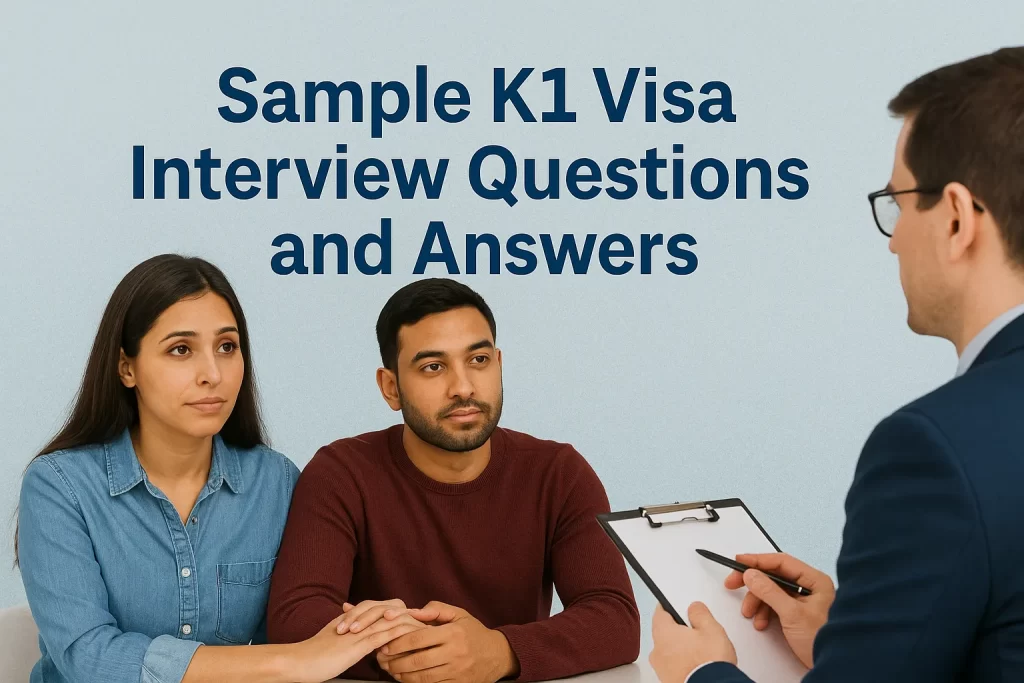
Practicing with sample questions is one of the best ways to feel prepared. The key is to answer honestly, with natural details, not robotic memorized lines. Here are examples of what you might be asked — and how to respond in a genuine way.
👫 Relationship Questions
Q: How did you meet your fiancé(e)?
A: “We met in 2020 through mutual friends at a birthday party. He asked me about my favorite music, and we ended up talking for hours. We’ve been close ever since.”
Q: When did you decide to get engaged?
A: “He proposed during our trip to Paris last year. We were walking near the Eiffel Tower at night, and it was such a beautiful moment.” 💍
💬 Daily Communication
Q: How do you usually stay in touch?
A: “We talk every day on WhatsApp. Most days it’s video calls, but we also send quick texts throughout the day just to check in.”
Q: Who usually calls first?
A: “Mostly me, since I finish work earlier. But he always calls me before bed if I haven’t already.”
👨👩👧 Family Questions
Q: Have you met your fiancé(e)’s family?
A: “Yes, I visited his parents last summer. They welcomed me so warmly, and his mom insisted I try all of her homemade dishes.” 🍲
Q: What do they think of your relationship?
A: “They’re very supportive. His dad always jokes that he gained another daughter.”
💒 Wedding Plans
Q: When and where do you plan to get married?
A: “We plan to marry in June in his hometown. We already reserved a small venue and are inviting close family and friends.”
Q: Who is helping with the wedding arrangements?
A: “We’re doing most of it ourselves, but his sister is helping with decorations and music.”
⚠️ Trick or Red Flag Questions
Q: What side of the bed does your fiancé(e) sleep on?
A: “The right side. He says it’s closer to the nightstand for his glasses.” 👓
Q: What is your fiancé(e)’s favorite food?
A: “He loves pasta, especially spaghetti carbonara. He could eat it every week.”
💡 Pro tip: Don’t worry if you forget small details — what matters is that your answers feel natural and match your fiancé(e)’s story.
👉 Practice with your partner until answering feels relaxed. The goal is to sound like yourselves, not like you’re taking a test.
🌍 K1 Visa Interview Abroad in 2025
Since the K1 fiancé visa is a consular process, the interview takes place outside the U.S. at the American embassy or consulate in the beneficiary’s country. This step is often the most stressful, but knowing what to expect makes it much smoother.
🏛️ Where it Happens
- Always at a U.S. embassy or consulate abroad.
- The exact location depends on where the beneficiary lives.
- Some embassies have higher backlogs than others, so timing can vary.
📅 Timeline in 2025
- After USCIS approves your I-129F petition, the National Visa Center forwards the case to the embassy.
- You’ll then receive instructions to schedule your interview.
- On average, most couples wait a few months, but in some countries, backlogs may stretch to 6–12 months.
📋 Embassy-Specific Requirements
- Each embassy may ask for slightly different supporting documents (extra translations, local police certificates, additional forms).
- Some embassies require you to schedule your medical exam before booking the interview.
- Others might require proof of fee payment in advance.
🛂 What Happens During the Interview
- The consular officer will review your DS-160, police certificates, and medical exam.
- You’ll be asked questions about your relationship, communication, and wedding plans.
- If everything looks good, the visa is typically approved on the spot.
- In some cases, the officer may request administrative processing, which can delay issuance by weeks or months.
🌐 Cultural Considerations
- In countries with stricter traditions, officers may be more cautious about relationships with large age gaps, short engagements, or differences in religion.
- Having strong supporting evidence of your relationship helps overcome these concerns.
💡 Pro tip: Always check your embassy’s official website before your interview. Requirements are not identical worldwide, and missing even a small local requirement can delay your visa.
👉 Remember: the embassy is the last big step. Once you pass the interview, you’re on your way to the U.S. to marry your fiancé(e) within 90 days.
🚀 How to Prepare for a K1 Fiance Visa Interview in 2025
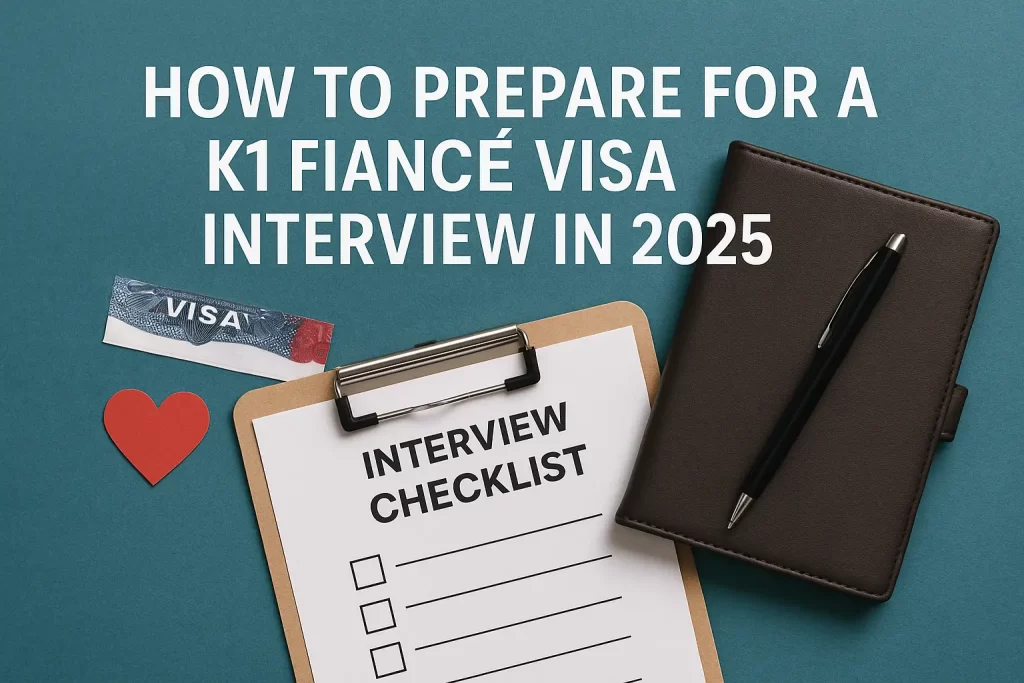
Think of your K1 fiancé visa interview like a performance 🎭 — you only get one shot to make the right impression. The more prepared you are, the smoother it will go. Here’s a simple timeline to follow:
📅 One Month Before
- Gather all required documents (passports, I-129F approval, DS-160, police certificates, medical exam).
- Organize evidence of your relationship into labeled folders.
- Start practicing interview questions with your fiancé(e) — not to memorize, but to refresh your memory.
📆 One Week Before
- Double-check your interview appointment letter.
- Confirm medical exam results are ready and valid.
- Review your application forms (I-129F and DS-160) so your answers match what you submitted.
- Print extra copies of all important documents.
📌 The Day Before
- Lay out your outfit — business casual is best 👔.
- Make sure your interview packet is organized and easy to carry.
- Get a good night’s rest to calm your nerves.
- Review a few practice questions lightly.
🕘 The Day Of the Interview
- Arrive at the embassy at least 30 minutes early.
- Bring your passport, appointment letter, and all documents.
- Stay calm while waiting — officers expect some nervousness.
- Answer questions clearly, confidently, and honestly.
- Keep eye contact and maintain a respectful tone.
💡 Pro tip: Don’t bring gifts, extra electronics, or unnecessary items to the embassy. Security is strict, and carrying too much can slow you down.
👉 Preparation not only makes you ready — it makes you confident. And confidence is exactly what officers notice in successful interviews.
✨ Conclusion
The K1 fiancé visa interview in 2025 may feel intimidating, but at its core, it’s simply about proving your love and commitment. Officers want to see a genuine relationship backed up with documents and consistent answers. Yes, they’ll ask about how you met, how you communicate, and what your wedding plans look like. They may even throw in tricky questions, like what side of the bed your fiancé(e) sleeps on. But remember — it’s not about perfection, it’s about authenticity.
If you’ve gathered your documents, practiced your answers, and prepared your story, you already have what it takes to succeed. Stay calm, stay confident, and walk into that interview knowing that this is the final step toward your future together in the United States. 💕
🔗 Further Reading & Resources
- USCIS: K-1 Fiancé(e) Visa – Official USCIS page on eligibility and process.
- U.S. Department of State – K Visa Instructions – Step-by-step overview of fiancé visa processing.
- VisaJourney K1 Visa Forums – Real-life experiences from applicants.
- National Visa Center (NVC) – Case forwarding and embassy instructions.
- American Immigration Lawyers Association (AILA) – Professional resources and updates.
💡 Pro tip for readers: Bookmark these resources — embassy requirements can vary, so double-check local instructions before your interview.