Author: Hasan Abdullah
Immigration status touches almost every part of daily life in the United States — work, housing, banking, family, and what happens during an ordinary encounter with police. Most of what circulates about "illegal immigrants" online is either overstated or oversimplified, and the real answers are usually more specific — and sometimes more permissive — than people expect.
This is a comprehensive FAQ covering the questions that come up most often, organized into six categories: what illegal immigration actually means, law enforcement encounters, everyday life and money, family situations, benefits and public programs, and — the section most general FAQs skip — the legal options that may still exist for someone currently out of status. Each answer is meant to actually explain the reasoning, not just give a one-word yes or no, because the "why" is usually what determines how a specific situation plays out.
None of this is legal advice for your specific circumstances. Immigration outcomes depend heavily on individual facts, and a few details — how someone entered the country, prior contact with immigration authorities, criminal history — can change the answer significantly. Where that's especially true, we've flagged it.
Not really. Both describe someone present in the U.S. without current legal authorization. "Undocumented" is more common in legal and advocacy writing; "illegal immigrant" is more common in everyday conversation and search. Neither term changes the underlying legal analysis.
The first is a visa overstay — entering legally on a tourist, student, or work visa and remaining after it expires. The second is entry without inspection (EWI) — crossing the border without being processed by an immigration officer at all. This distinction matters more than almost anything else discussed in this FAQ: someone who was legally inspected and admitted, even if their status later lapsed, generally has more flexibility to adjust status later, particularly through marriage to a U.S. citizen, without leaving the country. Someone who entered without inspection typically has to pursue relief through consular processing abroad instead, which introduces the unlawful presence bars covered below.
Yes. Core constitutional protections — due process, protection against unreasonable search and seizure, and others — generally extend to everyone physically present in the United States, not just citizens. That doesn't mean immigration status is irrelevant to how a situation unfolds legally, but the common assumption that undocumented immigrants have "no rights" isn't accurate.
Generally no. Unauthorized presence is treated as a civil immigration violation, handled through immigration court rather than the criminal justice system. The consequences are real — removal proceedings, reentry bars — but they aren't the same as a criminal conviction. The exception is illegal reentry after a prior formal removal order, which is a distinct federal crime with its own criminal exposure.

Yes, generally. Officers typically have the authority to ask, though local policy varies significantly — some jurisdictions restrict how and when local police can inquire about or share immigration status with federal authorities, and some cooperate closely. Being asked isn't the same as being obligated to volunteer information beyond what's legally required in that specific encounter.
Yes. Border patrol has broader authority near the border for immigration and customs enforcement, and agents can still act on ordinary traffic violations they observe, especially in areas known for smuggling activity. That authority narrows considerably away from border zones.
Beyond the standard DUI penalties — fines, license suspension, potential jail time — a DUI arrest can bring someone to the attention of immigration authorities and, depending on the jurisdiction and circumstances, contribute to removal proceedings. The undocumented status itself doesn't change the criminal charge, but it adds a second, separate set of consequences that a criminal defense attorney alone won't necessarily be positioned to address.
A citation for something like speeding is a very different situation than a DUI or criminal arrest. It typically results in the standard consequences — a fine, points, possibly a license issue — without automatically triggering immigration enforcement. Risk increases mainly if the stop escalates (no valid ID, an outstanding warrant, or a more serious violation), not from the ticket itself.
Potentially, yes, depending on the offense and the individual's specific history. Immigration authorities prioritize enforcement differently depending on the nature of the crime, so a minor misdemeanor doesn't carry the same weight as an offense involving violence, theft, or repeat convictions. There's no single answer here — it depends on the specific charge and the person's broader immigration and criminal history.
The most reliable method is ICE's online detainee locator system, or contacting ICE directly with the person's full legal name, date of birth, and country of origin. An immigration attorney can also make this inquiry on someone's behalf, which is often faster and more effective than navigating the system independently — particularly when time matters, such as before a bond hearing.
Yes, for various reasons — executing a warrant, conducting an investigation, or carrying out an enforcement action. What officers can do without consent (entering the home itself, for example) versus what requires a judicial warrant is a meaningful distinction, and it's worth understanding those limits before, not during, an encounter.
There's no fixed timeline. Some resolve in weeks; others extend for months or longer depending on the complexity of the case, the evidence involved, and how many parties or agencies are coordinating. The uncertainty itself is one of the harder parts of these situations, and it's usually more productive to focus on what can be controlled — documentation and legal representation — than to try to predict a timeline that isn't predictable.
Voluntary departure allows someone to leave the U.S. on their own terms, without a removal order on their record, generally preserving more options to lawfully return in the future. A formal removal order typically carries a longer reentry bar and a harder history to overcome for any future immigration benefit. Which option makes sense depends heavily on whether any form of relief from removal might realistically be available — a question worth having evaluated before agreeing to either.
Yes, but with an important caveat: unlike criminal court, the government isn't required to provide one free of charge. Anyone in removal proceedings can be represented by an attorney, but it has to be arranged privately or through pro bono/nonprofit legal aid where available. This is one of the starkest differences between immigration court and the criminal justice system, and representation status is one of the strongest predictors of outcome.

Many do, using an Individual Taxpayer Identification Number (ITIN) issued by the IRS for people who aren't eligible for a Social Security number. Filing with an ITIN doesn't confer immigration status, but it creates a documented history of presence and, often, of good-faith compliance — something that can matter later if a path to legal status becomes available.
An ITIN is a tax identifier, not proof of work authorization — those are two different things. Hiring someone without verifying actual work authorization, whether as an employee or as a 1099 contractor, can expose an employer to fines and penalties. Paying someone as a contractor doesn't eliminate that exposure the way it's sometimes assumed to.
Yes, generally. Most banks accept an ITIN or a foreign passport to open an account, though specific documentation requirements vary by institution.
Auto and life insurance are generally accessible in most states without a legal-status requirement. Health insurance is more limited — public programs like Medicaid and Medicare are generally unavailable, though some states offer emergency Medicaid or state-funded coverage for specific situations like prenatal care, and private insurance may be an option depending on the state and provider.
Renting, buying a car, and purchasing real estate with cash are all generally accessible without proof of legal status, since these transactions don't typically require it. Financing is where undocumented status becomes a real barrier — most conventional mortgage and auto-loan underwriting requires proof of legal residency, so cash or alternative financing arrangements become more relevant.
It depends on the state. Most states require proof of legal presence, but a number of states have created separate driving-privilege cards or licenses specifically for undocumented residents. These allow driving but don't establish legal immigration status for any other purpose.
Yes — owning a business doesn't require proof of immigration status. Practical friction tends to show up around business licensing, contracts, or financing rather than the ownership itself.
Domestic flights generally don't involve immigration status checks, though TSA identification requirements still apply. International travel is riskier — leaving the country can trigger the unlawful presence bars discussed in the legal options section below, and re-entry isn't guaranteed. This is a decision worth evaluating with an attorney before booking, not after.

No — this is one of the most common misconceptions. Marriage to a U.S. citizen doesn't automatically confer status. What it can do is open the door to a marriage-based green card application, but eligibility depends on the underlying facts: how the person entered the country, how much unlawful presence they've accrued, and whether the marriage can be documented as genuine. USCIS specifically scrutinizes these petitions for indicators of fraud, and a poorly prepared application can create more difficulty than it resolves.
Generally, yes — family courts prioritize the child's best interests over a parent's immigration status. Status can become an indirect factor if it raises legitimate questions about stability or the practical ability to provide long-term care, but it isn't a disqualifying factor on its own.
It's possible, but adoption laws vary by state and the process can be more complex when immigration status is involved, since it can affect both the adoption timeline and the adoptee's eligibility for certain benefits or status afterward. This is worth coordinating between a family law attorney and an immigration attorney rather than handling with one alone.
The underlying divorce process is the same as any other divorce, but service of process gets more complicated when one spouse is abroad — jurisdictional and notification requirements have to be handled correctly, which typically means working with a family law attorney experienced in cross-border service.

Determining if you have a deportation order involves checking with immigration authorities. Immigration and Customs Enforcement, or ICE, maintains records of deportation orders. You can contact ICE or consult with an immigration attorney to verify your immigration status and any existing deportation orders against you.
The duration of an ICE investigation varies widely based on the complexity of the case and other factors. Investigations can range from a few weeks to several months or even years. Factors such as the severity of the alleged violations, available evidence, and cooperation of involved parties can influence the investigation’s timeline.
An illegal immigrant can potentially become legal through marriage to a U.S. citizen or lawful permanent resident. They may apply for a marriage-based green card, but the process is complex and requires meeting eligibility criteria, including proving a bona fide marriage. Consulting an immigration attorney is advisable for guidance through the process.
The number of illegal immigrants crossing the border varies each year and is challenging to accurately quantify due to factors such as changes in border enforcement, economic conditions, and migration patterns. However, estimates suggest that hundreds of thousands of individuals attempt to cross the border illegally each year.
The duration of deportation proceedings can vary significantly depending on individual circumstances and legal factors. Deportation cases may take several months to years to resolve, depending on factors such as the complexity of the case, availability of legal representation, and backlog of cases in immigration courts.
To divorce an illegal immigrant who has been deported, you typically follow the same procedures as for any divorce. File for divorce in the appropriate jurisdiction, adhering to local laws and requirements. You may need to serve the divorce papers according to legal procedures, even if the individual is abroad. You should consult a family law attorney.
Yes, an illegal immigrant can be deported for a misdemeanor, depending on the severity the offense. Immigration authorities prioritize removal proceedings for individuals convicted of crimes, including misdemeanors. Factors such as the nature of the offense, immigration status, and individual circumstances can influence deportation decisions.
An illegal immigrant cannot directly obtain a work visa. They must first address their immigration status, which may involve applying for lawful status through available pathways such as family sponsorship, employment sponsorship, or humanitarian relief. Once legal status is obtained, they can apply for a work visa through appropriate channels.
Yes, it’s possible to adopt an undocumented immigrant, but the process can be complex. Adoption laws vary by jurisdiction and may require legal documentation and approval. Additionally, the immigrant’s legal status can impact the adoption process and eligibility for certain benefits or rights.
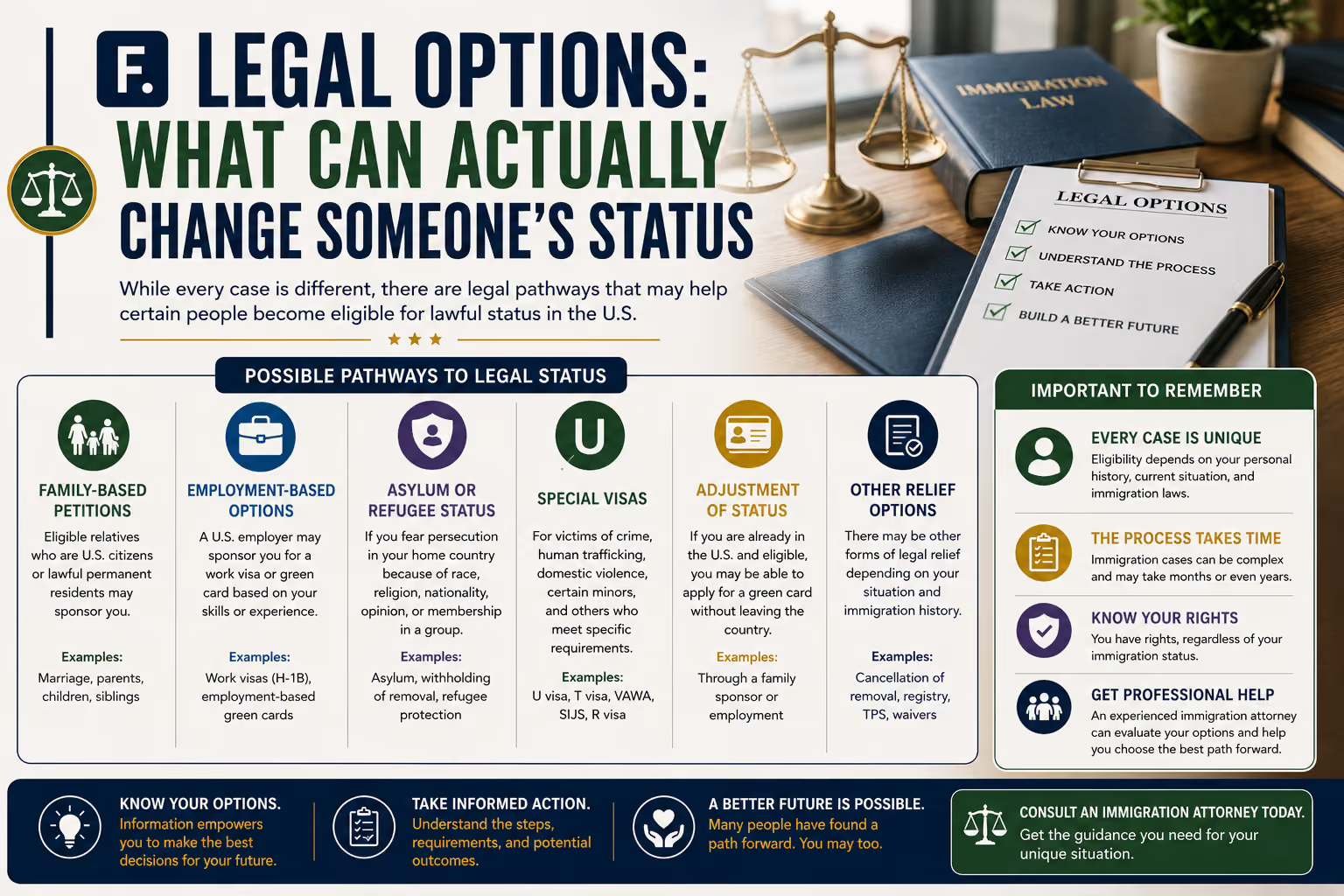
This is the section most general FAQs skip, and it's arguably the most important one. The honest answer is that legal options exist for some undocumented immigrants and not others, and the difference usually comes down to a handful of specific facts about someone's history.
Accruing more than 180 days of unlawful presence and then departing the U.S. can trigger a three-year bar to reentry; accruing a year or more can trigger a ten-year bar. These bars catch a lot of people off guard, because leaving the country can feel like a step toward fixing a status problem when it's actually the trigger for a much longer one. Waivers exist for specific situations, which is exactly why a departure decision should never be made without understanding how it interacts with someone's specific immigration history.
Sometimes. This is generally more accessible to someone who was inspected and admitted at the border (i.e., overstayed a visa) than someone who entered without inspection, who usually has to pursue relief through consular processing abroad instead — which is where the unlawful presence bars above become directly relevant.
For people who entered without inspection and would otherwise need to leave the country and trigger a reentry bar, a provisional waiver can, in qualifying cases, get the unlawful-presence waiver approved before departing for a required visa interview abroad. It doesn't eliminate the need to leave the country, but it substantially reduces the uncertainty of that process by resolving the hardest part of the waiver question in advance.
It's a form of relief available to people already in removal proceedings who can show a lengthy period of continuous physical presence, good moral character, and that their removal would cause exceptional hardship to a qualifying U.S. citizen or lawful permanent resident family member. It's a genuinely high bar, and it's only available once someone is already in proceedings — not something to pursue proactively outside that context.
Both provide a path to status for people who've been victims of certain crimes (U visa) or of abuse by a U.S. citizen or permanent resident spouse or parent (VAWA), without requiring cooperation from an uncooperative or abusive family member. These exist specifically because family-based petitions normally depend on the petitioning relative's cooperation, which isn't realistic in abuse situations.
Yes, if they can demonstrate a well-founded fear of persecution based on a protected ground if returned to their home country. Asylum law has strict filing deadlines and specific evidentiary requirements, and waiting too long to apply can foreclose the option entirely regardless of the underlying merits of the claim — this is one of the more time-sensitive areas of immigration relief.
It depends entirely on someone's country of origin and current government designations, which change based on policy decisions and shouldn't be assumed without checking current status. This is one of the more fluid areas of immigration law at the moment, and a designation that existed previously may no longer be in effect.
By filing a marriage-based green card petition once eligibility is confirmed — but "eligibility" is doing a lot of work in that sentence. It depends on how the person entered the country, their unlawful presence history, and whether the marriage can be well-documented as genuine. This is one of the most common paths people ask about and also one of the most frequently mishandled when pursued without proper guidance.
Two people with what looks, on the surface, like a similar situation — undocumented, married to a U.S. citizen, no criminal history — can have meaningfully different options based on details that seem minor from the outside: exactly how and when they entered the country, whether they've had any prior immigration filings or removal orders, and how much unlawful presence they've accrued and when. That's why almost every answer in this FAQ ends with some version of "it depends" — because it genuinely does, and generic advice tends to miss the detail that actually matters.
A consultation typically starts by mapping out that specific history before getting anywhere near a recommendation, and that mapping process is often where mistakes get caught before they become permanent — particularly around timing decisions like leaving the country, missing a filing deadline, or accepting voluntary departure without confirming whether stronger relief was available.
If cost is part of what's holding you back from getting that evaluation, it's worth reviewing what a consultation and representation typically involve before assuming it's out of reach. You can also learn more about AVLG's background and experience with family-based, employment-based, and waiver matters, or go directly to schedule a consultation if you're ready to discuss your specific situation.
This FAQ is intended for general informational purposes and does not constitute legal advice or create an attorney-client relationship. Immigration law and enforcement policy change over time, and outcomes depend on individual facts and circumstances. For guidance specific to your situation, consult a licensed immigration attorney.

Hasan Abdullah, Esq. is the Founder and Managing Attorney of American Visa Law Group. His practice focuses on U.S. immigration law, including family-based immigration, employment-based immigration, adjustment of status, consular processing, waivers, PERM labor certification, NIW, EB-1, H-1B, O-1, and complex immigration strategy.
Through American Visa Law Group, Mr. Abdullah helps individuals, families, professionals, investors, and employers understand their immigration options and plan around changing government policies, USCIS procedures, and Visa Bulletin movement. His work emphasizes practical legal analysis, realistic expectations, and strategy tailored to each applicant’s immigration history and long-term goals.
Need a consultation? Call 510-500-1155 to book a consultation with American Visa Law Group.


