


💡 Picture this — your Green Card is about to expire, and suddenly, everyday things like traveling abroad, renewing your driver’s license, or even verifying your work status become complicated. Sounds stressful, right? Unfortunately, thousands of permanent residents face this situation every year simply because they waited too long to renew.
⏳ In 2025, USCIS processing times are still unpredictable, and even small mistakes on your application can cause months of unnecessary delay. But the good news? You can easily avoid that by understanding how the renewal process really works — and doing things the smart way.
🪶 Renewing your Green Card isn’t just a legal formality; it’s your ticket to uninterrupted peace of mind. Whether you’re renewing online through Form I-90, gathering your documents, or tracking your case through your USCIS account, each step matters. Submitting your application early and correctly can mean the difference between a quick approval and a frustrating wait.
🚀 In this guide, we’ll break down how to renew your Green Card in 2025 without delays — from checking your expiration date and preparing your paperwork to understanding biometrics, travel, and work rights while your renewal is pending. You’ll also learn common mistakes that slow applicants down — and how to stay ahead of the system with practical, proven strategies.
✨ By the end, you’ll feel confident, organized, and ready to renew your Green Card the right way — quickly, accurately, and without any unnecessary setbacks. Let’s get started!
🕒 Check Your Green Card Expiration Date Early
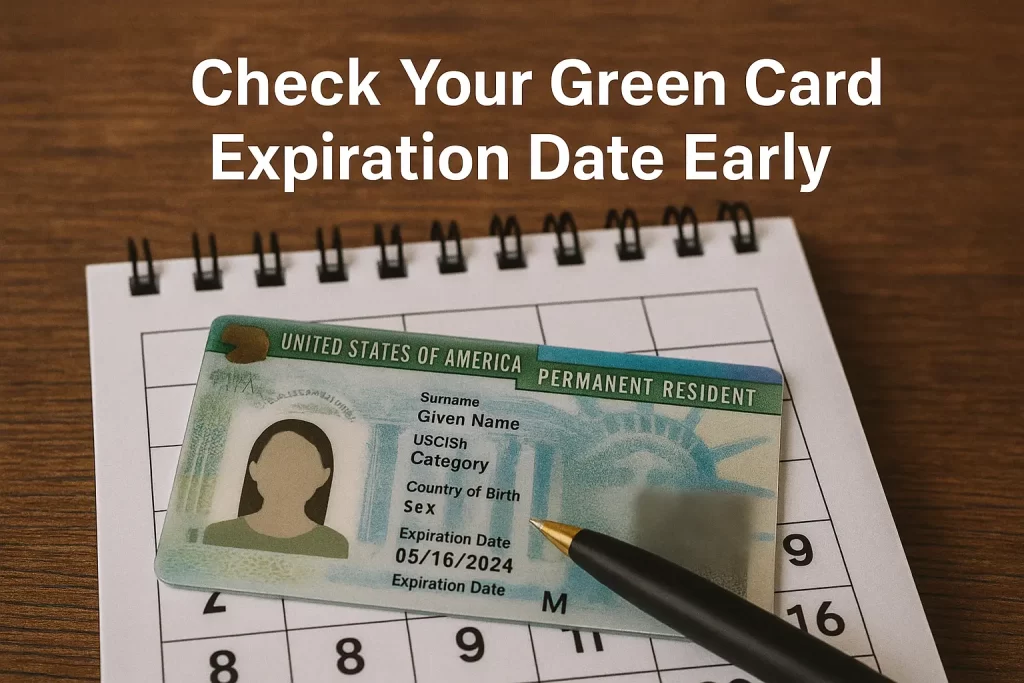
If there’s one simple thing that can save you months of stress, it’s this — check your Green Card expiration date early. You’ll find it printed right on the front of your card, under “Card Expires.” That tiny line might not seem like a big deal, but trust me, ignoring it can create a chain reaction of problems — from not being able to travel to delays at work verification or driver’s license renewal. 😬
🗓️ The best time to renew? Around six months before your card expires. USCIS recommends filing Form I-90 within this window so you have enough time to go through biometrics, case review, and card production without pressure. Waiting too long might mean you’ll be stuck with an expired card while your renewal is still processing — and that can complicate things like job verification (Form I-9) or re-entry into the U.S. after a trip.
Let’s say your Green Card expires in July 2025. Ideally, you should submit your renewal by January or February 2025. That gives you a buffer in case USCIS requests extra documents or has backlogs (which, let’s be honest, happens often).
💬 Here’s a quick story: A client once waited until the very last week to renew because they thought the expiration didn’t matter as long as they “had proof” of filing. Unfortunately, their employer needed a valid card for re-verification — and they ended up missing work for weeks while waiting for their I-797C extension notice. Moral of the story? Don’t cut it close.
🔍 Pro tip: set a digital reminder 8 months before your card expires — one on your phone, another in your email. You’ll thank yourself later. Renewal is smoother when you stay one step ahead of USCIS timelines.
So, before doing anything else, take out your wallet, check your card’s expiration date, and circle it on your calendar (in red!). That tiny bit of organization can save you from massive headaches later. ❤️
📄 Prepare the Required Documents for Green Card Renewal
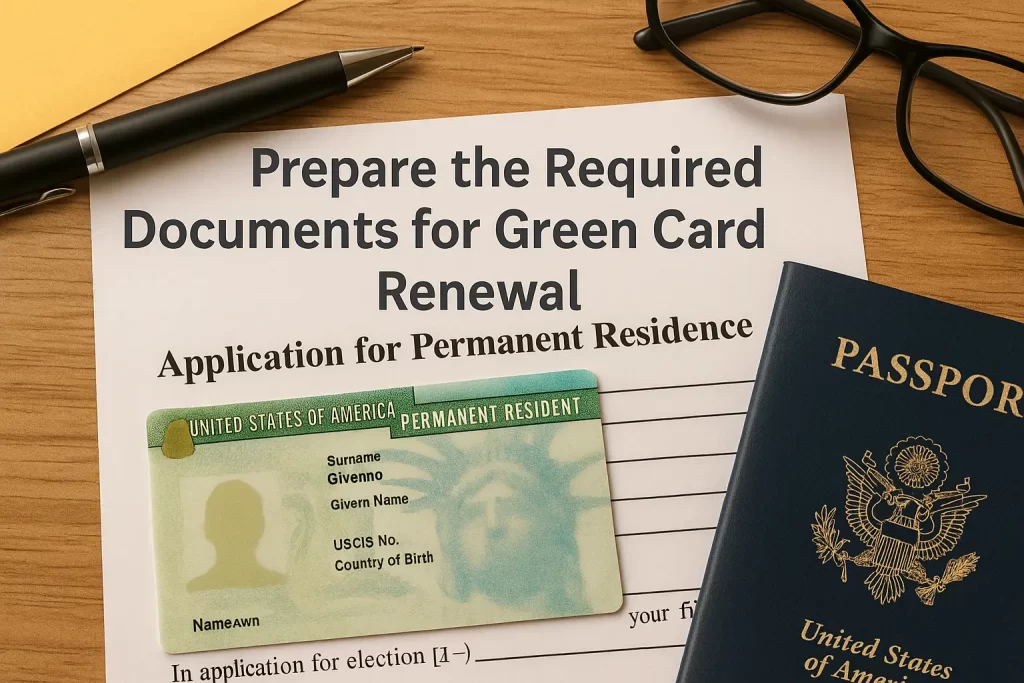
Alright, so you’ve checked your expiration date — now it’s time to gather your documents. 🗂️ This step might sound boring, but it’s honestly where most people mess up. Forget one small thing, and USCIS could hit you with a Request for Evidence (RFE) that slows your renewal for months. Let’s not do that, yeah?
Here’s what you’ll need before you even start your Form I-90:
✅ Your current or expired Green Card.
If you’ve lost it, don’t panic — you can still renew, but you’ll need to explain what happened (lost, stolen, damaged, etc.) and provide proof of identity like your passport or state ID.
🪪 A valid government-issued photo ID.
This could be your passport, driver’s license, or military ID. Make sure the photo looks like you (USCIS loves comparing details).
📸 A recent digital photo (for online filers).
It should be high quality — plain background, no shadows, neutral expression. Think “passport photo,” but friendlier. 😄
💻 Access to your myUSCIS account (if you’re filing online).
You’ll upload your documents here, so have good scans ready. Blurry or cropped files = delays.
💰 Payment method.
The filing fee for Form I-90 is usually around $455 plus $85 for biometrics, but always double-check the USCIS website because fees sometimes change. You can pay online using a card or bank transfer.
🗒️ Supporting documents (if applicable).
For instance, if your name changed after marriage, include your marriage certificate. If your card was damaged, attach clear photos of it. The goal is to make USCIS’s job as easy as possible.
✨ Pro tip: Always combine your files into one clean, labeled PDF before uploading. Example: “GreenCard_Renewal_Documents_YourName.pdf.” It shows professionalism and helps avoid confusion during review.
💬 I once helped someone who uploaded sideways photos of their documents — and yep, USCIS couldn’t read them. They had to re-submit everything, adding three months to their wait time. Little things matter!
So, take an hour to double-check your documents. Brew some coffee ☕, sit down, and make sure each file is sharp, complete, and properly named. Once this step is done, you’re already halfway to a smooth renewal. 🌱
💻 File Form I-90 Online to Save Time

If there’s one upgrade USCIS has nailed in recent years, it’s the ability to renew your Green Card online. 🙌 No more paper chaos, no trips to the post office, no wondering if your package got lost in the mail. Filing online through your myUSCIS account can shave weeks off your renewal time — and let’s be honest, who doesn’t love avoiding government paperwork delays? 😅
🌐 Step 1: Create or log into your myUSCIS account.
Head over to uscis.gov and sign in or create an account. It takes just a few minutes — and you’ll use this same account to track your case, upload documents, and get updates. Think of it as your immigration control center.
📝 Step 2: Start Form I-90 (Application to Replace Permanent Resident Card).
Once logged in, choose “File a Form Online” and select Form I-90. The system will guide you step-by-step — easy stuff like confirming your personal info, card number, and reason for renewal (usually “My card is expiring soon”).
📤 Step 3: Upload your documents.
Make sure every document is crystal clear. No dark shadows, no cropped edges. Upload your ID, passport, and photo exactly as requested. Remember — clarity = speed.
💳 Step 4: Pay your filing fee.
You can pay securely online with a debit or credit card. USCIS will send an instant confirmation once the payment goes through — keep that receipt safe. Some applicants may qualify for a fee waiver, but you’ll need to upload Form I-912 and supporting proof of financial hardship.
🔔 Step 5: Submit and track your case.
Once you hit “submit,” your case enters the USCIS system immediately — no mailing lag. You’ll get an instant receipt number (starting with “IOE”) that lets you track every step in real time.
💬 True story: I once helped someone file both online and by mail to “make sure USCIS received it.” Big mistake. It caused duplicate cases and six months of delay. So, pick one method only — online is almost always faster in 2025.
✨ Pro tip: Turn on email and text notifications in your account. USCIS won’t always send paper letters right away, so getting digital alerts helps you stay on top of biometrics appointments and updates instantly.
By filing online, you’re basically cutting out the middleman — fewer errors, faster updates, and less stress. 🚀 In 2025, USCIS continues to encourage digital submissions, so if you want your renewal done fast, this is the way to go.
⚠️ Avoid Common Mistakes That Cause Renewal Delays

You’ve done the work — checked your expiration date, gathered your documents, filed online — but even the most prepared applicants can get caught by small mistakes that trigger big delays. 😬
Let’s talk about the most common ones so you can dodge them like a pro.
🚫 1. Forgetting to sign your form (or using the wrong version).
It sounds silly, but it happens all the time. If you’re filing by mail, unsigned forms = automatic rejection. If you’re filing online, make sure you complete the e-signature step before hitting “Submit.” Double-check you’re using the latest Form I-90 version from the USCIS website — older forms are rejected.
🏠 2. Not updating your address before filing.
If you’ve moved recently and didn’t update your address with USCIS, your Green Card or notices might go to the wrong mailbox. 📬 Always update your address first using Form AR-11 or through your myUSCIS account.
💰 3. Paying the wrong fee or skipping biometrics.
Some applicants try to skip the biometrics fee — bad idea. Unless USCIS specifically waives it, you’ll need to pay both parts ($455 + $85). Forgetting it can pause your case until payment is fixed.
🖼️ 4. Submitting unclear or cropped documents.
Upload full, readable scans — no cut corners, no blurry photos. Remember, USCIS officers review hundreds of cases daily. Make theirs easy, and they’ll process yours faster.
📅 5. Ignoring USCIS Requests for Evidence (RFE).
If you receive an RFE, you must respond by the deadline. Missing it means your renewal can be denied altogether. Set reminders the moment you get one, and upload your response through your USCIS account.
📮 6. Filing twice or mixing online + mail submissions.
Some applicants think “doubling” their file will make it faster. Nope. It creates confusion and duplicate cases, which USCIS must merge or close. Always stick to one method — preferably online.
💬 I once helped a friend who panicked after submitting and sent an “updated” paper version. Result? Two tracking numbers, two biometric appointments, and nearly five months of delay. Don’t do it.
✨ Pro tip: Review your application three times before submitting. Once for accuracy, once for attachments, and once for payment. Treat it like you’re double-checking travel documents before an international flight — because in a way, you are! 🌍
Avoiding these little traps keeps your file smooth, fast, and stress-free. Every minute you spend double-checking now could save weeks (or even months) later. ⏳
⏰ Understand the Green Card Renewal Timeline in 2025
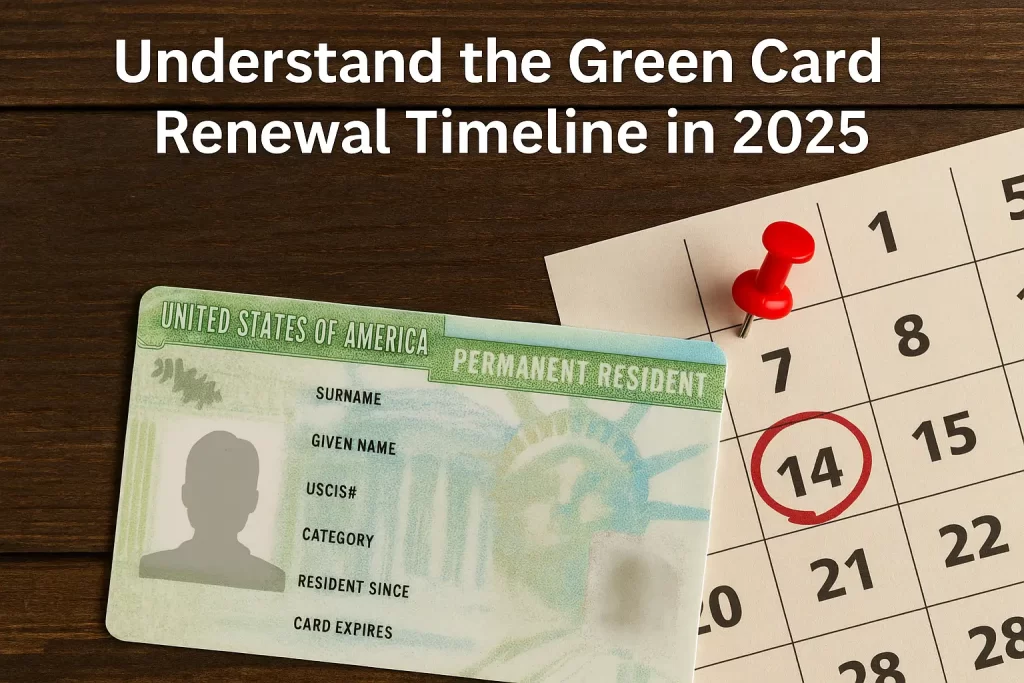
Time — that’s the one thing USCIS never seems to move fast enough with, right? 😅 But understanding the Green Card renewal timeline in 2025 helps you stay calm, organized, and one step ahead. Let’s break down what really happens once you hit “Submit.”
📬 Step 1: Case Receipt Notice (1–3 weeks)
Right after you file Form I-90 (online or by mail), you’ll receive a receipt notice — officially called the I-797C Notice of Action. This confirms USCIS got your application. It also includes a receipt number (starting with “IOE” if filed online) — your golden ticket to track your case status anytime. 🎟️
🧬 Step 2: Biometrics Appointment (3–8 weeks)
Next comes your biometrics appointment, where USCIS collects your fingerprints, photo, and signature. You’ll get a letter with the date, time, and location. Bring your passport or another government-issued ID — and show up early! Missing it can delay your renewal by months.
💻 Step 3: Case Review (2–6 months)
Once biometrics are done, your application enters the review stage. USCIS checks your background, verifies your records, and ensures everything matches. In 2025, this phase can vary by state and workload — but most applicants see decisions within 4 to 8 months total.
📮 Step 4: Green Card Production & Delivery (1–3 weeks)
Once approved, your new Green Card goes into production. You’ll get a notification when it’s shipped — usually via USPS with a tracking number. Don’t forget to check your mail regularly during this period (and keep your address updated!).
😬 What if it takes longer?
If your case is “stuck” beyond the normal timeframe, don’t panic. You can:
- Submit a case inquiry through your myUSCIS account.
- Call the USCIS Contact Center.
- Or ask for help from your local congressperson’s office — they can sometimes expedite stalled cases.
✨ Pro tip: Keep your I-797C notice handy — it serves as temporary proof of your lawful permanent residency for up to 24 months after your card expires. That means you can still travel, work, and re-enter the U.S. legally while your renewal is pending.
💬 Quick story — someone I helped once thought they couldn’t travel because their card was expired. But their extension notice kept them fully covered, and they made it to their cousin’s wedding in Mexico stress-free. 🕊️
So, breathe easy. As long as you plan early, stay organized, and keep your receipts safe, you’ll glide through the 2025 timeline with confidence. 🌺
✈️ Travel and Work While Your Green Card Renewal Is Pending

So, your Green Card renewal is in progress — but life doesn’t stop, right? You might need to travel, work, or renew your driver’s license before your new card arrives. The good news is: you still have rights and proof of status while waiting. You just need to know how to show them correctly. 🌎✨
🪪 Your I-797C Notice Is Your Temporary Green Card
After you submit Form I-90, USCIS sends you a Receipt Notice (Form I-797C). This little paper is powerful — it automatically extends your Green Card’s validity for 24 months beyond the printed expiration date.
💬 That means even if your card looks expired, you can still work, travel, and live normally during the renewal process. Always keep this notice with your old Green Card. Together, they act as valid proof of your lawful permanent residency.
💼 Using It for Employment Verification
If your employer asks to update your I-9 form, just show your expired Green Card and your I-797C notice. ✅ USCIS officially recognizes this combo as proof of ongoing work authorization.
✈️ Traveling Abroad While Waiting for Renewal
You can travel abroad while your renewal is pending — but only if you have both your expired card and your extension notice. U.S. Customs and Border Protection (CBP) officers at the airport know this rule well, but it’s still smart to carry both documents in your hand luggage (not checked baggage).
If your Green Card is already expired and you don’t have your notice yet, you’ll need a temporary proof of status called an I-551 stamp in your passport. You can get it from your nearest USCIS field office through an InfoPass appointment. 🛂
📅 Important tip: Don’t plan international travel right after you file your renewal. Wait until you receive your I-797C notice. That way, you won’t get stuck at the border explaining your situation without paperwork.
💬 One of my clients once traveled to Europe before getting their receipt — and re-entering was stressful. They had to call USCIS from abroad and wait for verification at customs. Lesson learned: timing matters!
🌺 Pro tip: Always keep digital copies of your receipt notice and expired card on your phone or email. If you ever lose your originals while abroad, those copies can save the day.
So yes — you can absolutely keep working and even travel while your renewal is in progress. Just stay organized, keep your documents handy, and plan ahead. Your Green Card status doesn’t pause just because your renewal is pending — and that’s a relief worth smiling about. 😊
🪪 What to Do if Your Green Card Is Lost, Stolen, or Damaged
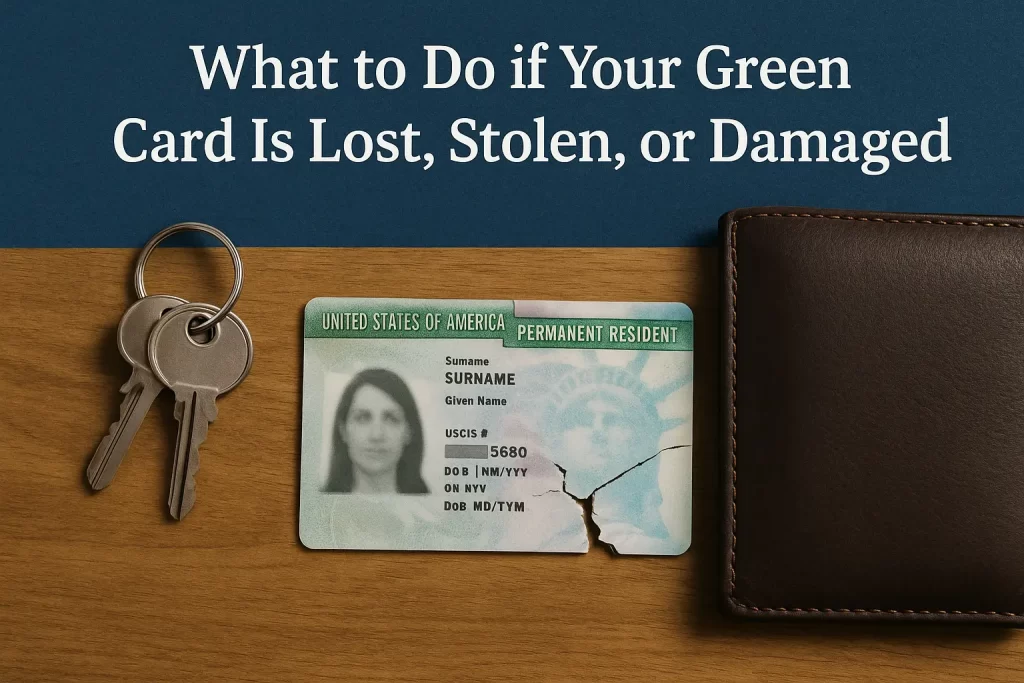
Let’s be honest — losing your Green Card feels awful. 🫣 Whether it’s stolen, misplaced, or damaged beyond recognition, that sinking feeling hits hard. But breathe. You’re not the first person this has happened to — and it’s absolutely fixable if you act quickly and follow the right steps. 💪
🚨 Step 1: Report it (if stolen or lost in public).
If your Green Card was stolen, file a police report as soon as possible. This isn’t just for safety — USCIS might ask for proof later. Having that report also helps protect you from identity misuse, especially if your card ends up in the wrong hands. 🧾
💬 If you lost it somewhere (like while moving or traveling), you don’t have to file a report, but it’s still smart to write a short statement explaining how and when you lost it. Keep it simple and honest — that’s all USCIS needs.
📄 Step 2: File Form I-90 (Replacement Option).
You’ll use the same form — Form I-90 — but choose the option that says “My card was lost, stolen, or destroyed.” You can do this online through your myUSCIS account or by mail if needed.
🖼️ Step 3: Gather your supporting documents.
Since you don’t have your old card, attach a passport copy, driver’s license, or another valid ID to confirm your identity. If you filed a police report, upload that too. The more proof you include, the faster USCIS can verify your case.
💳 Step 4: Pay the same renewal fee.
Yes — replacing a lost or stolen Green Card costs the same as renewing one (around $540 total). USCIS doesn’t waive this fee unless you can prove extreme financial hardship with Form I-912.
🛂 Step 5: Request an I-551 stamp if you need urgent proof.
If you have upcoming travel or job verification and can’t wait for your new card, book an InfoPass appointment at your local USCIS field office. Bring your passport and receipt notice — they’ll give you an I-551 stamp (valid for up to 12 months) that acts as temporary proof of your lawful status.
💬 Fun fact — I once helped someone get their I-551 stamp the day before flying for a family emergency. The officer was kind, quick, and the process took under 30 minutes. So yes, it can be fast when you explain your situation clearly. 🙏
✨ Pro tip: If you often travel or move between states, keep a scanned copy of your Green Card stored safely in the cloud (like Google Drive or Dropbox). It’s not a substitute for the real thing, but it helps prove your identity and makes filing for a replacement smoother.
So, even if your card vanishes, remember — your residency doesn’t. You’re still a lawful permanent resident. You just need to reprint the proof. 🌿
Beautiful 🌿 Let’s wrap up the main guide with this powerful, practical section — uplifting, detailed, and easy to follow, all with your signature emoji rhythm 👇
⚡ Renewal Tips to Avoid USCIS Backlogs in 2025
USCIS delays can feel like watching paint dry… on a rainy day. 😅 But here’s the truth — most backlogs aren’t random. They often happen because applicants make small timing or filing mistakes that push their case to the back of the line. So if you want your 2025 renewal to move fast, here’s how to play it smart. 🚀
🗓️ 1. Renew early — don’t wait for the last month.
The golden window is 6 months before your Green Card expires. Waiting too long puts you right into peak processing season (and trust me, it’s not fun). Early renewals get reviewed faster and have fewer “case holds.”
💻 2. File online instead of mailing paper forms.
In 2025, USCIS prioritizes online filings. Submitting Form I-90 digitally avoids mailing delays, data-entry errors, and lost documents. Plus, you can track your status live through your myUSCIS dashboard — no guessing games.
📄 3. Double-check your application before you submit.
One typo in your name or address can cause weeks of confusion. Review every line — twice. Use clear, color scans and follow all USCIS photo rules. The cleaner your file, the quicker the approval.
💬 4. Keep all your notices and emails.
Every time USCIS sends you something — a receipt, RFE, or biometrics letter — save it both physically and digitally. You’ll thank yourself later if you ever need to follow up or prove your filing date.
📞 5. Don’t ignore USCIS updates.
Policy changes, fee adjustments, and extension updates happen more often than people realize. Subscribe to the USCIS newsletter or check their official site once a month. One missed update could affect your eligibility window or cost.
🪪 6. Ask for help if things get complicated.
If you’ve had name changes, criminal history, or lost documents, consult an immigration attorney early. A short consult can save you months of back-and-forth with USCIS later.
💡 7. Keep your records tidy for life events.
Your Green Card renewal isn’t just about now — it affects future processes like citizenship applications or travel permits. Having organized files helps your future self more than you think.
💬 I’ve seen people lose months simply because they ignored one USCIS email. On the flip side, the ones who renew early, file online, and stay responsive usually get their cards back before they even worry. 🌈
✨ Pro tip: Schedule your next renewal reminder right after receiving your new card. Yup — set it and forget it. Future you will be very grateful.
So, the key to avoiding USCIS backlogs in 2025? 🌿
Stay ahead, stay digital, stay calm — and your renewal will flow like clockwork. 🕰️
🌸 Conclusion
Renewing your Green Card doesn’t have to feel like a maze. 🪴 With the right timing, clear documents, and a calm mindset, you can glide through the process in 2025 without unnecessary stress or delays. You’ve already done the hardest part — showing up, taking action, and getting informed.
💡 Remember: your Green Card isn’t just a document — it’s your proof of belonging, your ticket to travel freely, work confidently, and live securely in the United States. The sooner you renew, the smoother your path stays.
Here’s the winning formula:
✔️ Check your expiration date early.
✔️ Gather your documents carefully.
✔️ File online and keep digital copies.
✔️ Respond quickly to USCIS updates.
✔️ Stay patient but proactive.
🌈 Even if USCIS feels slow sometimes, your effort matters. Each form you review, each photo you double-check — it’s all part of protecting your peace and keeping your future stable.
💬 One of my favorite quotes says, “Preparation is the quiet work that makes everything look effortless.” That’s exactly what Green Card renewal is — quiet preparation that keeps your life flowing smoothly.
So, take a deep breath, pour yourself a cup of coffee ☕, and get started today. Your future self — with a shiny new Green Card in hand — will thank you. 💚
🔗 Further Reading & Helpful Links
🇺🇸 Official USCIS Resources
- Renew or Replace Your Green Card (Form I-90)
- USCIS Case Status Tracker
- USCIS Processing Times Tool
- Change of Address Form (AR-11)
- Fee Waiver Information (Form I-912)
🧾 Additional Guides & Insights
- U.S. Citizenship and Immigration Services Updates
- USCIS Field Office Locator (for I-551 stamp appointments)
- U.S. Customs and Border Protection: Re-Entry Guidelines
- Department of Homeland Security – Permanent Resident Rights
🌐 AVLG Blog (Suggested Internal Links for SEO)
- How Long Does It Take to Get a Green Card? (2025 Update)
- Travel Rules for Green Card Holders: What to Know Before Leaving the U.S.
- How to Avoid Delays When Filing USCIS Forms Online