


“Can I get a green card if I’m undocumented?”
It’s one of the most common—and emotionally charged—questions in immigration. If you’re living in the U.S. without legal status, it might feel like the door to permanent residency is permanently locked. But here’s the truth: it’s not. It’s just complicated.
Whether you overstayed a visa, entered without inspection, or grew up undocumented and don’t even remember another home—there are legal pathways that could help you get a green card in 2025. They’re not easy. Some depend on your family. Some depend on your past. Some require you to prove things like hardship or good moral character. And yes, most involve a whole lot of paperwork, patience, and sometimes, legal help.
But here’s the good news: it’s possible. And you’re not alone in wondering how.
In this guide, we’ll break it all down. We’re talking about:
- How marriage to a U.S. citizen could help (even if you crossed the border illegally)
- What to do if you’ve been here more than 10 years
- Whether DACA or TPS can open the door
- And which waivers might forgive past mistakes
This isn’t legal advice—but it’s a real, updated look at your options. Because no one deserves to live in fear or confusion forever. And for many undocumented immigrants, getting a green card is the first real step toward peace, safety, and a future.
Let’s get into it.
🧩 What Is a Green Card and Why It Matters
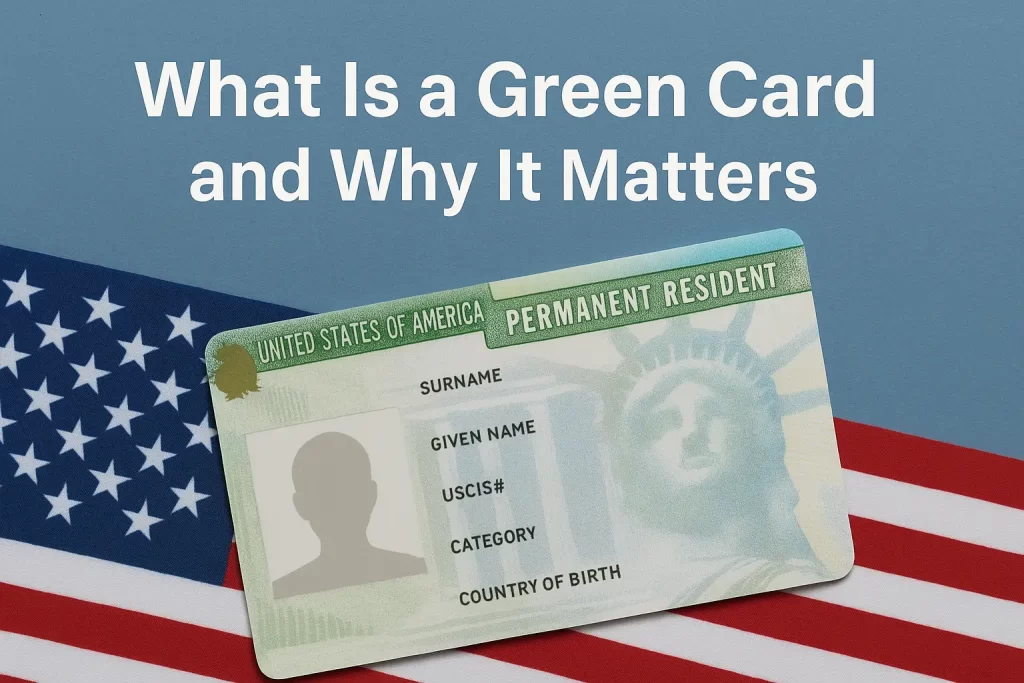
So before we dive into the “how,” let’s be clear on the what—and the why.
A green card is the everyday name for a lawful permanent resident card. It means you’re officially allowed to live and work in the U.S. permanently. You don’t need to hide. You don’t need to worry about deportation. You can get a driver’s license in most states, sign up for health insurance, travel abroad, and even sponsor certain family members later.
Oh—and after a few years, you can apply for U.S. citizenship. That’s huge.
But here’s the kicker: just because it’s called “permanent residence” doesn’t mean it’s permanent no matter what. You can lose it if you commit serious crimes, leave the country for too long, or commit immigration fraud. So yeah—it’s powerful, but it comes with responsibility.
💡 Why Green Cards Matter So Much for the Undocumented
If you’re undocumented, getting a green card is more than a status update. It’s:
- Security: You’re no longer constantly looking over your shoulder.
- Freedom: You can travel without the fear of not being let back in.
- Dignity: You’re legally recognized as part of the country you may have called home for years.
- Opportunity: You can legally work in any job and qualify for benefits that might’ve been closed off before.
I once met a guy who lived in the U.S. for 15 years without papers. Worked construction. Never got into trouble. Paid taxes using an ITIN. But he told me the only time he really exhaled was the day that green card showed up in the mail. “It wasn’t just a card,” he said. “It was proof I belonged here.”
💭 Common Misconceptions
A lot of people think that getting a green card is just about applying or filling out a form. But the truth is—you need to qualify. The law doesn’t give green cards just for being a good person or paying taxes. You usually need a legal path—and that’s what the rest of this guide is all about.
💍 Marriage to a U.S. Citizen or Lawful Permanent Resident
Let’s start with one of the most common—and most misunderstood—paths: marriage.
Yes, undocumented immigrants can get a green card through marriage.
No, it’s not automatic. And no, immigration doesn’t just hand one over because you tied the knot.
That said, if you’re undocumented and married to a U.S. citizen or green card holder, you may have a real shot at adjusting your status—depending on how you entered the country and your background.
💡 If You Entered the U.S. Legally (With a Visa)
Good news: if you originally entered the U.S. with a visa, even if it expired years ago, you may be eligible to adjust status without leaving the country.
That means no consular interviews, no risky departures, and usually no waiver needed.
You’ll apply using:
- Form I-130 (Petition for Alien Relative)
- Form I-485 (Adjustment of Status)
You’ll need to prove your marriage is real (not just for papers) and go through an interview. But thousands of people do it every year. If this is you—breathe. There’s a solid legal path ahead.
⚠️ If You Entered Without Inspection (EWI)
Here’s where it gets tricky. If you crossed the border without papers and were never “inspected” at a port of entry, you generally can’t adjust status from inside the U.S.
But that doesn’t mean it’s game over.
You might still get a green card by:
- Having your spouse file the I-130
- Applying for a Provisional Unlawful Presence Waiver (Form I-601A)
- Leaving the country for a consular interview once the waiver is approved
The waiver is key. It basically forgives the time you were undocumented, so you don’t trigger a 3- or 10-year ban when you leave for your interview. Without that waiver? You risk being stuck outside the U.S. for years.
🧾 Proving Your Marriage Is Real
USCIS doesn’t just take your word for it. You’ll need to show:
- Joint bank accounts, leases, or insurance
- Photos, messages, and travel together
- Evidence of a shared life
Fake marriages = big trouble. Immigration fraud is a felony and can ruin your chances forever. But if your marriage is real? You’re on solid ground.
🤔 What If You’re Married to a Green Card Holder (Not a Citizen)?
You can still get a green card—but you’ll have to wait for a visa to become available, which could take 1–2 years. The same rules about legal entry and waivers apply. If your spouse becomes a citizen while you wait, you may be able to speed up the process.
Getting a green card through marriage isn’t fast or simple—but for many undocumented immigrants, it’s the most realistic path forward. And if done right, it leads to a future where you’re protected, recognized, and no longer living in the shadows.
🆘 Asylum and Humanitarian Options
Not everyone can get married or qualify through family. But that doesn’t mean there’s no hope. Some undocumented immigrants are eligible for a green card through asylum, humanitarian protections, or special relief programs designed for vulnerable individuals.
Let’s walk through a few of the most powerful options—especially if you’ve experienced harm, abuse, or danger either here or in your home country.
🕊️ Asylum
If you fear returning to your home country because of persecution based on race, religion, nationality, political opinion, or membership in a particular social group, you may qualify for asylum.
- You generally must apply within 1 year of entering the U.S.
- If granted, you can apply for a green card 1 year after your asylum approval
- Asylum is free to apply for, and no lawyer is required—but having one helps a lot
Undocumented immigrants can still file for asylum even if they’ve crossed illegally or overstayed—as long as they haven’t been deported already.
🛡️ VAWA (Violence Against Women Act)
If you were abused by a U.S. citizen or green card holder who is your spouse, parent, or child, VAWA allows you to file a self-petition—without their help or knowledge.
You don’t have to stay silent or stay in danger. If you can show abuse, mistreatment, or control (even emotional or financial abuse), VAWA may open a path to legal status and eventually a green card.
- Available to men and women
- Doesn’t require police reports—but documentation helps
- Keeps your application confidential from your abuser
💔 U Visa (Crime Victims)
If you’ve been a victim of a qualifying crime (like domestic violence, assault, trafficking, stalking, or kidnapping) and helped law enforcement investigate or prosecute it, the U visa could be for you.
- Offers temporary status for 4 years
- Allows you to apply for a green card after 3 years
- Long waitlist—but worth it if you qualify
- Can include family members in the petition
👶 Special Immigrant Juvenile Status (SIJS)
If you’re under 21, undocumented, and were abused, neglected, or abandoned by one or both parents, you may be eligible for SIJS. It’s a special path to a green card created just for kids who need protection.
- Requires a state court order (often through family or juvenile court)
- No need to prove fear of return like in asylum
- Fast track to a green card without risking deportation
🌪️ Temporary Protected Status (TPS)
While TPS doesn’t lead directly to a green card, it protects people from countries experiencing war, disaster, or unrest, letting them live and work legally in the U.S. And some TPS holders later become eligible for adjustment if other circumstances change (like marriage or a new law).
These humanitarian options exist because the law recognizes that not everyone chooses to be undocumented. Some people flee for their lives. Some suffer abuse. Some were brought here as children.
If you qualify for one of these programs, they can be life-changing—offering protection, healing, and eventually, permanent residency.
⚖️ Cancellation of Removal in Immigration Court
This is one of the least understood yet most powerful tools available to some undocumented immigrants—but only if you’re already in removal (deportation) proceedings. It’s called Cancellation of Removal, and if granted, it can stop your deportation and give you a green card.
Sounds wild, right? Let’s break it down.
🧑🏽⚖️ What Is Cancellation of Removal?
It’s a form of discretionary relief offered by immigration judges. You can’t apply for it like a typical green card process—you have to be in immigration court, facing deportation.
If you meet the strict criteria, the judge can “cancel” your removal and approve you for lawful permanent residency on the spot.
✅ Who Qualifies?
For undocumented immigrants (not green card holders), you must prove:
- You’ve lived continuously in the U.S. for at least 10 years
- You have good moral character
- You have not been convicted of certain crimes
- Your removal would cause “exceptional and extremely unusual hardship” to your U.S. citizen or green card holding spouse, child, or parent
Let’s pause there. That last point? It’s the hardest to prove. We’re not talking about just financial or emotional stress. You have to show something truly extreme—like a U.S. citizen child with a serious disability who needs you to survive.
📑 What Happens in Court?
- Your attorney (if you have one) submits your application and evidence
- You go to a hearing and testify under oath
- The judge decides whether or not to grant the green card
- If granted—you walk out with a pathway to permanent residency
- If denied—you could be ordered removed
It’s a high-stakes process. And immigration courts are backed up like crazy. But for some people, it’s the only shot they have.
😬 What If You Don’t Qualify?
If you haven’t been in the U.S. long enough or don’t meet the “hardship” requirement, the judge can’t help—even if they want to. That’s why you need to prepare carefully, gather evidence, and ideally, work with an immigration attorney.
Cancellation of Removal is like a legal Hail Mary—but when it works, it’s life-changing. Thousands of undocumented immigrants have turned their deportation cases into green card victories using this route. It’s not for everyone, but it’s worth knowing about—especially if ICE comes knocking.
🪪 DACA and Parole in Place Options
Not every undocumented immigrant is eligible for marriage-based relief or asylum—but there are some unique programs that offer stepping stones toward a green card. Two of the most important ones are DACA and Parole in Place (PIP).
Neither of these guarantees a green card on their own—but they can open the door to one, especially if you qualify through a family member or other legal pathway.
🌟 DACA: Deferred Action for Childhood Arrivals
DACA was created for undocumented immigrants who were brought to the U.S. as children. It doesn’t provide a direct path to a green card, but it offers protection from deportation and work authorization—and for some, it’s a vital step toward legal status.
To qualify, you must have:
- Arrived in the U.S. before age 16
- Lived in the U.S. since at least June 15, 2007
- Been under 31 years old as of June 15, 2012
- Had no serious criminal history
- Met education or military service requirements
Here’s where it ties into green cards: if a DACA recipient travels with “advance parole” and re-enters legally, they may then be eligible to adjust status inside the U.S. if they marry a U.S. citizen. That’s a huge deal.
But in 2025, DACA remains legally fragile—pending lawsuits and policy changes could affect future applications. Always check with a lawyer before acting on it.
🪖 Parole in Place (PIP): For Military Families
This little-known program is for undocumented family members of active-duty military, veterans, and selected reservists.
Here’s how it works:
- If approved, PIP gives you a legal entry “on paper”—even if you originally entered the U.S. without inspection
- That “entry” can then make you eligible to adjust status through a U.S. citizen spouse, child, or parent
It’s one of the only ways for undocumented people who entered without inspection to avoid leaving the country for a green card interview.
PIP is discretionary and not guaranteed—but when granted, it can be a game-changer.
🔄 Advance Parole and Re-entry
Some DACA recipients and TPS holders can apply for advance parole, which allows them to temporarily leave the U.S. for humanitarian, educational, or employment reasons—and return legally.
Why is that important? Because a legal entry opens doors. If you later marry a citizen or become eligible for adjustment, that prior re-entry might be what makes it all possible.
These programs are rare lifelines in a system that often feels like a dead end. They’re not green cards in themselves, but they can give you the footing you need to finally qualify for one.
🚫 Common Obstacles and Ineligibility Traps

Okay, so by now you’ve seen that there are ways for undocumented immigrants to get a green card. But let’s be honest: immigration law is full of landmines. You could be eligible on paper—but hit one of these traps and derail the entire process.
This section covers the most common issues that block people from getting a green card—even if they meet other requirements.
⛔ Unlawful Presence Bars: The 3- and 10-Year Bans
If you’ve been in the U.S. without status for more than 180 days and then leave, you could be banned from returning for:
- 3 years if you were here 180 days to 1 year
- 10 years if you were here over 1 year
These bars are triggered when you leave the U.S.—like for a green card interview at a consulate. That’s why so many people need a waiver (Form I-601A) before they leave, to avoid being stuck outside the country.
🚷 Entry Without Inspection (EWI)
If you crossed the border illegally without being admitted at a port of entry, you usually can’t adjust your status from inside the U.S. That’s a major roadblock—unless you qualify for an exception (like Parole in Place, advance parole, or a waiver).
⚠️ Prior Removal or Deportation Orders
If you’ve ever been ordered deported—whether you left voluntarily or not—it complicates everything. You may need to file a motion to reopen your case, get legal counsel, and potentially wait outside the U.S. for years depending on the circumstances.
Also: trying to re-enter after being deported can trigger a lifetime ban.
🚨 Fraud or False Claims to U.S. Citizenship
This one’s serious. If you’ve falsely claimed to be a U.S. citizen (like on a job application or voting form), it can result in a permanent bar to any immigration benefit. There are some exceptions, but they’re narrow and tricky.
Always be honest in all your applications—even if the truth is complicated. The consequences of lying are often worse than the original issue.
❌ Criminal Convictions
Some crimes can disqualify you completely—especially those considered:
- “Crimes involving moral turpitude” (CIMTs)
- Drug offenses (even small ones)
- Aggravated felonies
But not all convictions make you ineligible, and in some cases, waivers are available. It depends on the type of crime, how long ago it happened, and whether you’ve shown rehabilitation.
📉 Failure to Maintain DACA, TPS, or Other Status
If you were once protected under DACA or TPS and let it lapse—through missed deadlines or criminal issues—it could eliminate future adjustment options. Stay on top of renewals and deadlines.
Immigration law is complex for a reason—it’s designed to screen people carefully. But don’t let that intimidate you. Knowing what can go wrong is the first step to doing it right.
And if you hit one of these obstacles? Don’t panic. There may still be legal tools or waivers to help you move forward—which brings us to the next section.
📝 Legal Tools That May Help You Adjust Status
So maybe you don’t have a clean record. Maybe you crossed the border illegally or overstayed a visa. Maybe you’re married to a U.S. citizen but were told you’re “inadmissible.”
Before you give up—know this: immigration law includes legal tools called waivers and petitions that can help undocumented immigrants fix their status.
They’re not easy to get, and they require solid evidence. But in many cases, they’re the difference between a dead end and a green card.
🧾 Form I-601 & I-601A Waivers (Waivers of Inadmissibility)
If you’re undocumented due to unlawful presence, misrepresentation, or other bars, you may be able to apply for a waiver that forgives those issues—if you can prove:
- Your U.S. citizen or green card holding spouse or parent would suffer extreme hardship if you were denied entry or removed
- You’ve been a person of good moral character
- You don’t pose a threat to public safety
🔹 Form I-601A is the Provisional Unlawful Presence Waiver, used before you leave the U.S. for a consular interview—so you don’t trigger the 3- or 10-year bar without knowing you’ll be forgiven first.
🛂 Adjustment of Status vs. Consular Processing
- Adjustment of status happens from within the U.S.—ideal for those who entered with a visa or qualify through exceptions like DACA advance parole or Parole in Place.
- Consular processing is done abroad, usually at a U.S. consulate in your home country. Riskier for those with unlawful presence—but necessary in some cases.
Which one you qualify for depends on your entry method, background, and relationship to a petitioner. Get this part wrong and you could end up separated from your family for years.
🧑⚖️ Immigration Attorneys: Why They Matter
Yes, immigration forms are available online. And yes, some people do it themselves.
But for undocumented immigrants—especially those with past entries, criminal records, or denied applications—working with an experienced immigration attorney is critical.
They can:
- Spot risks you didn’t know about
- Prepare waiver arguments
- Build a strong case with supporting evidence
- Keep you from triggering bars or denials
Many nonprofit legal aid groups offer low-cost or even free immigration help if you qualify. Don’t go it alone if your case is complicated. It’s not worth the risk.
📋 Documents You’ll Need (and Should Start Collecting Now)
- Birth certificate
- Marriage certificate (if applicable)
- Entry records or visa info (if any)
- Tax filings, pay stubs, leases, utility bills
- Proof of continuous presence
- Medical records or hardship documentation (for waivers)
- Letters from family, community, or faith leaders
Keep copies and scan everything. Immigration cases are won and lost on documentation.
These tools are complicated—but they exist for a reason. They allow people who’ve built lives in the U.S.—who love, work, and raise families here—a chance to finally be seen, be safe, and be permanent.
🌎 Special Programs and Legislation to Watch in 2025
Immigration law isn’t static. It changes with each administration, each court ruling, each Congress. So if you’re undocumented and hoping to get a green card, it’s critical to stay up to date on new laws, proposals, and programs that could open a path for you—or close one.
Let’s break down what to watch in 2025.
🧑⚖️ Proposed Immigration Reform Bills
Every few years, Congress debates some version of “comprehensive immigration reform”—a big law that would create legal pathways for millions of undocumented immigrants. Some past bills have included:
- Path to citizenship for long-term undocumented immigrants
- Faster adjustment for DACA and TPS recipients
- Legalization for essential workers or farmworkers
Nothing has passed in recent years—but in 2025, new bills are being introduced, and political pressure is mounting. If something changes, the door might open wide.
➡️ Pro tip: Follow updates from USCIS, immigration legal nonprofits, or trusted law firms. If a law passes, there may be deadlines, and acting fast matters.
📜 Registry Provision (for Long-Term Undocumented Immigrants)
This little-known section of immigration law could be a lifesaver—if expanded.
Right now, if you’ve lived continuously in the U.S. since before January 1, 1972, you can apply for a green card under a rule called “registry.” No family sponsor or marriage required.
Advocates are pushing for Congress to update that date—maybe to 2010 or later—which would allow millions of long-term undocumented immigrants to finally legalize their status.
It hasn’t passed yet, but if it does? It’ll be historic.
⚠️ DACA and TPS Updates
Both DACA (Deferred Action for Childhood Arrivals) and TPS (Temporary Protected Status) remain in flux.
- DACA is in legal jeopardy in federal court—again. New applications are currently on hold, but renewals are still allowed.
- TPS designations are being renewed, expanded, or terminated depending on the country—so eligibility changes constantly.
➡️ If you hold DACA or TPS, or could be eligible based on your country of origin, watch for program changes closely. They can impact your path to a green card—especially if you qualify for travel permission or future legalization.
🪪 Parole and Work Programs from DHS
In recent years, DHS has rolled out country-specific parole programs that allow immigrants from places like Cuba, Venezuela, Haiti, and Nicaragua to enter the U.S. legally and apply for work authorization.
While these programs don’t directly offer green cards, they may evolve into adjustment options under future legislation—especially if recipients have U.S. citizen relatives or qualify for asylum.
🧭 New Administration, New Priorities
Whether it’s a presidential election, a shift in Congress, or a new Attorney General, immigration enforcement and green card policies can swing quickly. Who holds power in Washington directly affects:
- How many waivers are approved
- How aggressive deportations become
- What programs are created or shut down
That’s why it’s important to stay informed, vote if you can, and stay connected to immigrant rights groups that track every change.
Immigration law is frustrating, fragile, and full of obstacles—but it’s also full of possibility. In 2025, we’re not starting from scratch—we’re standing on the work of generations pushing for justice.
And if change happens this year?
You’ll want to be ready.
✅ Conclusion
So… can undocumented immigrants get a green card?
Yes—sometimes. But the truth is, there’s no one-size-fits-all answer. Your pathway depends on how you entered the country, how long you’ve been here, who you’re connected to, and what your personal story looks like.
For some, it’s marriage to a U.S. citizen.
For others, it’s a waiver, asylum, cancellation of removal, or a humanitarian program like VAWA or SIJS.
And for many—it’s a long, winding road that starts with fear, but can lead to freedom.
In 2025, the laws are changing. The system is still tough—but it’s not hopeless. There are legal tools. There are exceptions. And if you qualify, you could go from undocumented to permanent resident—with patience, evidence, and the right support.
But this isn’t something to do alone.
📌 Talk to a trusted immigration attorney.
📌 Watch for new laws and deadlines.
📌 Gather your documents now—so you’re ready when the door opens.
Whether you’ve lived in the U.S. for 2 years or 20… you deserve the chance to feel safe, seen, and legally recognized.
And if you’re reading this for someone else? Share it. You never know whose life you might change.
📚 Further Reading and Official Resources
✅ General Immigration Guidance
- USCIS Green Card Overview
https://www.uscis.gov/green-card
→ Start here for official USCIS information on green card eligibility and processes. - Find Legal Help (AILA Immigration Lawyer Search Tool)
https://www.aila.org
→ Locate a qualified immigration attorney near you.
💍 Marriage-Based Adjustment of Status
- Form I-130 (Petition for Alien Relative)
https://www.uscis.gov/i-130 - Form I-485 (Application to Adjust Status)
https://www.uscis.gov/i-485 - Form I-601A (Provisional Waiver)
https://www.uscis.gov/i-601a
🕊️ Asylum and Humanitarian Protections
- USCIS Asylum Information
https://www.uscis.gov/humanitarian/refugees-and-asylum/asylum - VAWA Green Card Process
https://www.uscis.gov/humanitarian/abused-spouses-children-and-parents - U Visa Overview (Crime Victims)
https://www.uscis.gov/humanitarian/victims-of-crime - SIJS (Special Immigrant Juveniles)
https://www.uscis.gov/working-in-the-united-states/special-immigrant-juveniles
⚖️ Deportation & Court Defense
- EOIR (Executive Office for Immigration Review)
https://www.justice.gov/eoir
→ Learn more about immigration court, hearings, and cancellation of removal.
🪪 DACA & TPS Updates
- DACA Information Page
https://www.uscis.gov/DACA - TPS Eligibility and Countries List
https://www.uscis.gov/humanitarian/temporary-protected-status
🛡️ Military-Related Options
- Parole in Place for Military Families
https://www.uscis.gov/military/parole-in-place
📌 Stay Updated on Immigration Policy
- American Immigration Council
https://www.americanimmigrationcouncil.org - Immigrant Legal Resource Center (ILRC)
https://www.ilrc.org - National Immigration Law Center (NILC)
https://www.nilc.org
🧾 Forms & Fee Calculators
- USCIS Forms All-In-One Page
https://www.uscis.gov/forms - USCIS Fee Calculator
https://www.uscis.gov/feecalculator