


So you’ve decided you want to live in the United States permanently—awesome! 🇺🇸
But now you’re staring down a maze of green card categories, and it’s like choosing between love and labor. Seriously. The two most common routes? Family-based and employment-based green cards. Each one tells a totally different story.
In 2025, these two green card categories are still the top dogs. Family-based visas made up over 60% of U.S. green cards last year, while employment-based options have grown increasingly competitive due to tech jobs, research opportunities, and investor programs.
Here’s the thing—both processes are legit, life-changing, and kinda complex. But the differences in eligibility, processing times, cost, and overall lifestyle impact? Huge.
You might be surprised how much the country you were born in, your job title, or your relationship status can affect your entire timeline. And don’t even get me started on the visa bulletin—it’s like playing Tetris with your future. 🎮
If you’re stuck wondering which route is better for you, you’re in the right place. We’re breaking it all down: step by step, comparison by comparison. Let’s demystify this green card puzzle together!
👨👩👧👦 What Is a Family-Based Green Card?
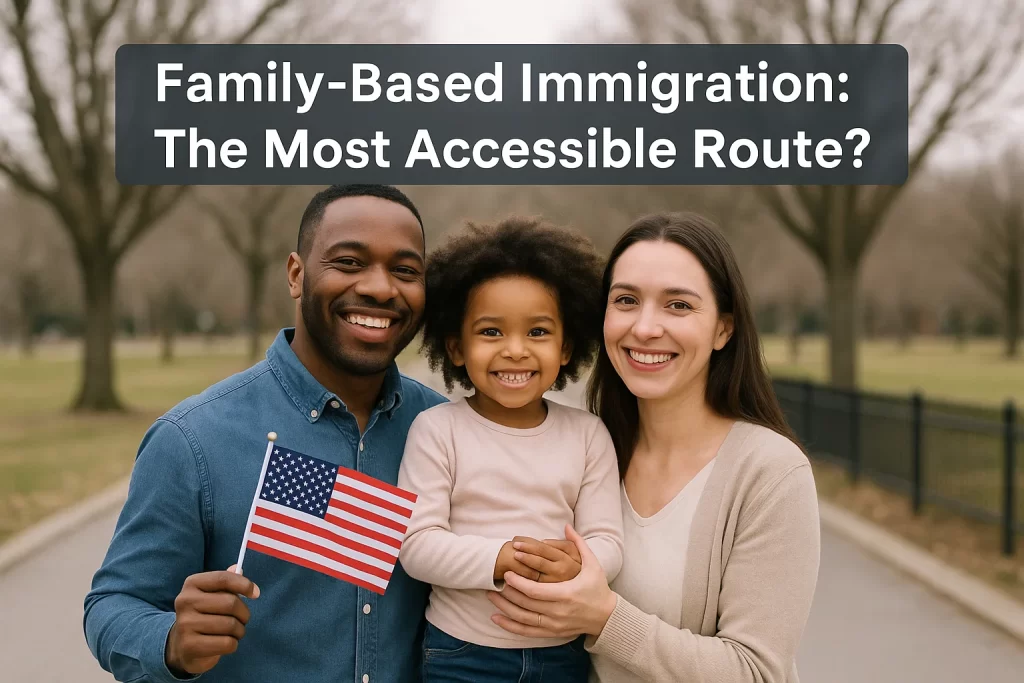
If you’ve got close family in the U.S., you’re already holding one of the most powerful keys to a green card. 🗝️ Seriously—family-based immigration has been a cornerstone of the U.S. system for decades. It’s about reuniting loved ones, keeping families whole, and making that American dream feel a little less lonely.
There are two big categories under this path:
👉 Immediate Relatives
This includes spouses of U.S. citizens, unmarried children under 21, and parents of adult U.S. citizens. And here’s the magic part: there’s no annual cap. That means no waiting in a never-ending visa line—once your paperwork clears, you’re in!
When my friend married her American partner, her green card was processed in less than a year. No priority dates. No waiting for her “number to become current.” Just a straightforward (albeit paperwork-heavy) path. ✍️
👉 Family Preference Categories
This is where things get trickier. If you’re a sibling of a U.S. citizen or a married child, you fall under this group—and unfortunately, there’s a quota. Depending on your country, the wait can range from a few years to over a decade. 😓
I once met a guy from the Philippines whose sister sponsored him. He’s been waiting 16 years—no joke. That’s because high-demand countries like Mexico, India, and the Philippines often hit the cap fast and early.
🧾 What’s the Process Like?
Let me walk you through it:
- The U.S. citizen or green card holder files an I-130 petition for the family member.
- USCIS reviews the case to make sure the relationship is legit (they’ll check birth certificates, marriage licenses, photos—everything).
- Once approved, the case goes to the National Visa Center (NVC) if you’re abroad, or you can adjust status from inside the U.S. using Form I-485.
- You’ll also need to submit an affidavit of support, showing the sponsor can financially support the applicant.
Pro tip: If you’re getting married, take your time building your documentation. They will want to see proof your marriage is genuine (think: joint bank accounts, wedding photos, lease agreements). 🕵️♂️
📌 Other Things to Keep in Mind:
- Green card holders can’t sponsor parents or married children.
- Petitions for siblings and adult kids take the longest.
- Same-sex couples are fully eligible if legally married—thankfully, U.S. immigration law recognizes those unions.
In short? If you’ve got family in the U.S., this route might be the most emotionally fulfilling. But depending on your category, it could also be the slowest. ⏳
💼 What Is an Employment-Based Green Card?
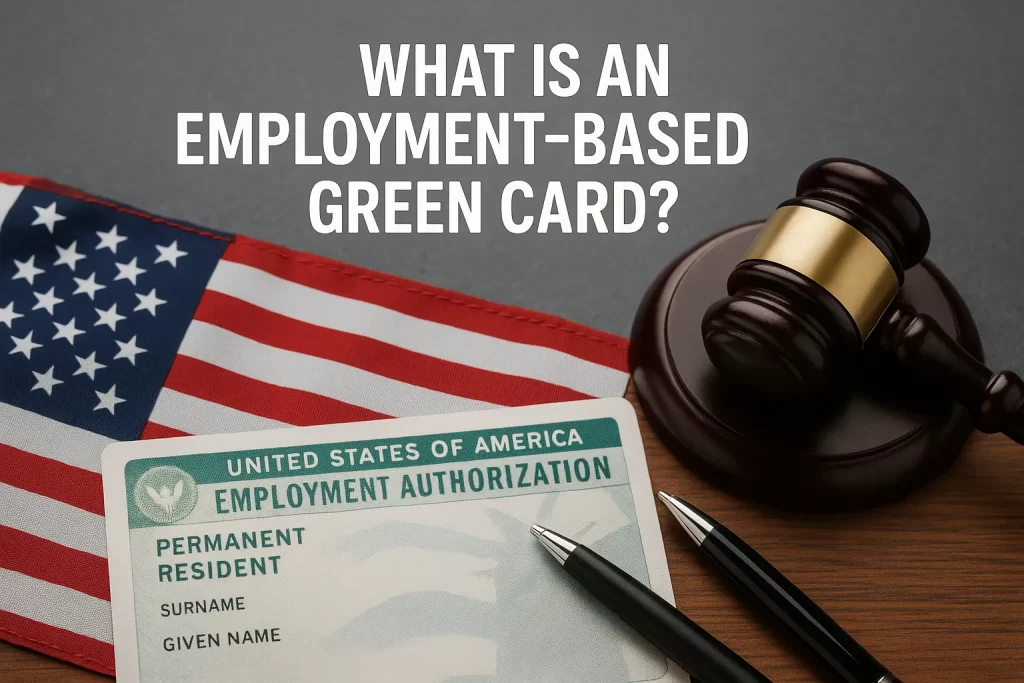
If you’re more about LinkedIn than love letters, the employment-based green card might just be your thing. This path is all about proving your value in the U.S. job market—your skills, your degrees, your talent. It’s the work-hard-make-it-happen route. 💪📈
Unlike family-based green cards, employment-based (EB) green cards come in five categories—each with its own rules, timelines, and vibes. Let’s break them down:
📊 EB-1: The All-Stars
This category is for the best of the best—think Nobel Prize winners, CEOs, researchers, or Olympic athletes. No job offer needed in some cases, and the processing time? Fast. I had a friend who self-petitioned as an “alien of extraordinary ability” (yes, that’s the real term!) and got her green card in under 8 months. 🚀
Covers:
- Outstanding professors/researchers
- Multinational execs
- People with extraordinary ability in arts, science, business, or athletics
🧑🔬 EB-2: The Highly Skilled & Educated
This one’s for folks with advanced degrees or “exceptional ability.” If you can prove that your work benefits the U.S., you might even self-petition under the National Interest Waiver (NIW)—no employer needed. But if you go the traditional route, you’ll likely need an employer and a labor certification (PERM). Bureaucracy, here we come!
Pro tip: NIW is great if you’re in public health, energy, AI, or research. Just don’t underestimate the paperwork—it’s intense.
🛠️ EB-3: Skilled, Professional, & Other Workers
This is the most common route for people working jobs that require at least 2 years of experience or a bachelor’s degree. The catch? Processing times can be longer, especially for high-demand countries like India or China.
Example: Nurses, engineers, restaurant managers, and even some construction workers can qualify here.
💰 EB-5: The Investor Path
Got $800,000 to spare? You can invest in a U.S. business and create 10 full-time jobs for Americans. In return, you get a green card. It’s risky, but some folks love this option because it skips employer or family sponsorship altogether. (Just… hire a lawyer. Seriously.)
👷 EB-4: Special Workers
This includes religious workers, certain Afghan/Iraqi nationals, and some U.S. government employees. It’s a more niche route, but still valid.
🔄 The Process, Step-by-Step:
- Your employer files a labor certification (PERM) to prove no U.S. worker can fill your role.
- They then file Form I-140 on your behalf.
- You either adjust status (Form I-485) if you’re in the U.S., or go through consular processing abroad.
- Some people can self-petition in EB-1A or EB-2 NIW.
Bonus tip: If you’re on an H-1B and your employer loves you, ask about starting the green card process by year 4. That way, you’ll avoid the H-1B max-out panic. 🧠
👀 Good to Know:
- EB categories have annual caps and per-country limits.
- Some employment-based green cards are faster than family-based ones—especially if you’re in EB-1.
- You’re often tied to your job during the process, which can feel risky if you want to change employers.
Perfect! Let’s compare the timelines in our next section:
⏳ Comparison of Processing Times
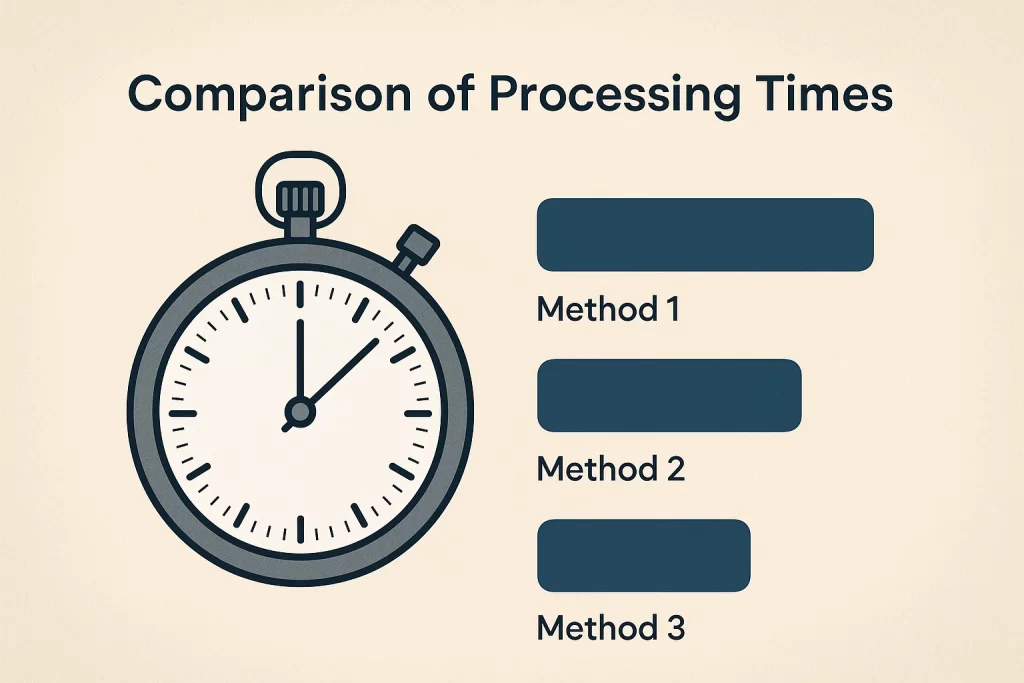
When it comes to green cards, timing is everything. You might be dreaming about your new life in the U.S., but how long you wait depends heavily on the path you choose. Family-based vs. employment-based? The differences in processing time can be dramatic—and often frustrating. ⌛💥
🧬 Family-Based Processing Times: A Mixed Bag
Let’s break it down:
✅ Immediate Relatives (Spouse, Parents, Unmarried Kids <21)
- Fastest processing of all categories
- No annual caps = no visa bulletin delays
- Usually takes 10–18 months depending on the service center and completeness of the application
- Example: My cousin married a U.S. citizen and had her green card in hand in 11 months flat
🟡 Family Preference Categories (F1, F2A/B, F3, F4)
- Annual visa caps + country-specific quotas = serious backlogs
- Wait times vary dramatically:
- F2A (spouses of green card holders): ~24–36 months
- F3 (married children of U.S. citizens): often 5–8 years
- F4 (siblings of U.S. citizens): 10–20+ years for countries like India, Mexico, Philippines
- The Visa Bulletin becomes your new best frenemy. You’ll refresh it monthly like you’re checking your horoscope. 😅
💼 Employment-Based Processing Times: Efficiency Meets Chaos
🟢 EB-1
- Usually the fastest employment category
- Can be approved in as little as 6–12 months if premium processing is used
- No PERM required = fewer delays
🧠 EB-2 / EB-3
- With PERM labor certification, processing time can stretch:
- PERM alone takes 8–12 months
- I-140 + I-485: another 12–18 months
- For citizens of India or China, add years due to visa number backlog
- Tip: Premium processing for I-140 helps, but doesn’t bypass PERM delays
💰 EB-5 Investors
- Used to take 2–5 years
- Now seeing faster timelines in regional centers—but only if all paperwork is clean
- Big delays if job creation proof is lacking
📊 So… Which One’s Faster?
| Green Card Type | Typical Timeline | Major Bottleneck |
| Family – Immediate Relative | 10–18 months | USCIS review + interview |
| Family – Preference | 3–20+ years | Visa Bulletin wait |
| EB-1 | 6–12 months | Documentation strength |
| EB-2 / EB-3 | 2–4 years | PERM + country caps |
| EB-5 | 2–5 years | Investment/job creation proof |
It’s a waiting game, for sure. But if you’re in a backlogged category, consider dual strategies (like getting sponsored through work while waiting for a family petition to become current).
And always—ALWAYS—track the Visa Bulletin like a hawk. 🦅 It’s your window into where you stand in the global green card race.
💰 Costs Involved in Both Processes
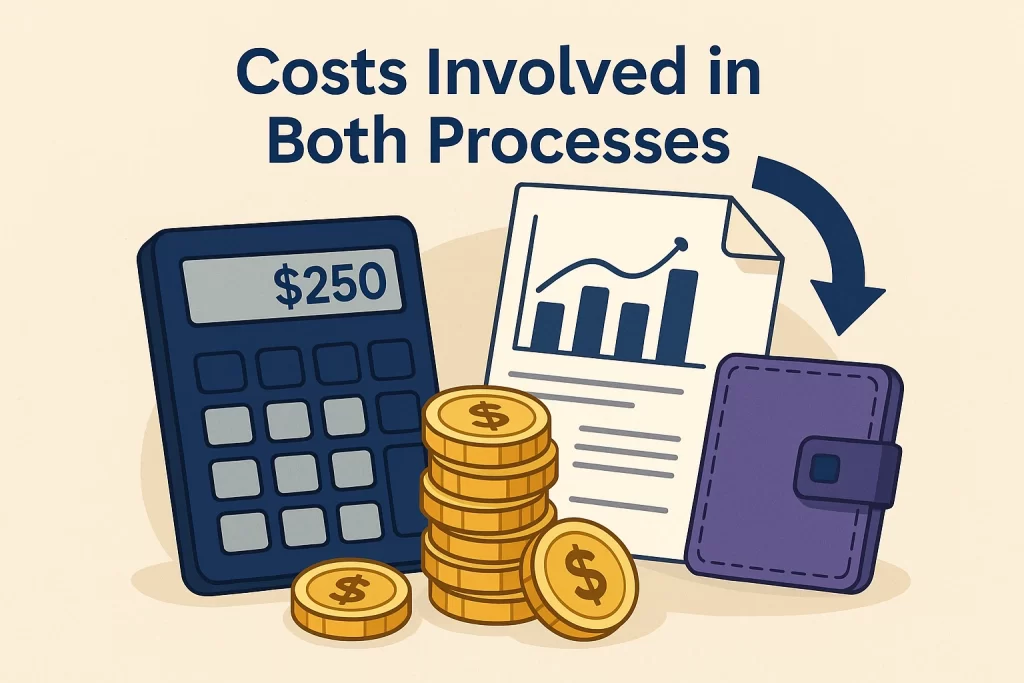
Okay, let’s talk cash—because no matter which green card path you take, it ain’t cheap. Whether you’re applying through family ties or your career hustle, you’ll need to budget for filing fees, legal help, medical exams, translations, and even things like courier charges. It adds up. 💸🧾
🧾 Family-Based Green Card Costs
If you’re being sponsored by a family member, here’s what you’re likely looking at:
- Form I-130 (Petition for Alien Relative): $535
- Form I-485 (Adjustment of Status): $1,225 (includes biometrics)
- Affidavit of Support (Form I-864) + supporting docs: Free to file, but you’ll need tax returns, W-2s, etc.
- Medical Exam (Form I-693): $200–$500 depending on the doctor
- Translations & document prep: ~$100–$500 if needed
- Attorney fees (optional): $1,500–$3,000
🧠 Total Estimate: $2,000–$4,000 (without lawyer), up to $6,000+ with legal help
When my friend applied through her U.S. citizen spouse, she thought it would be cheap since they did most paperwork themselves… but they still spent close to $2,500 with all the forms, mailing, and medical costs combined. It sneaks up on you.
💼 Employment-Based Green Card Costs
This one? More complex—and often more expensive. And in many cases, the employer covers a portion of it, especially for PERM-related steps.
- PERM Labor Certification: Free to file, but attorney fees range from $2,000–$5,000
- Form I-140 (Immigrant Petition): $700
- Premium Processing (optional): $2,805 (as of 2025—yup, it keeps increasing)
- Form I-485: $1,225
- Medical Exam: $200–$500
- Translations, courier, etc.: ~$100–$400
- Attorney fees: $3,000–$7,000 total (more for EB-1 or NIW cases)
🧠 Total Estimate: $5,000–$12,000 (depending on category and who pays for what)
One of my coworkers went the EB-2 route with employer support and didn’t pay a dime upfront—but when he switched jobs before getting his green card, he had to restart everything and paid nearly $10,000 out of pocket. Painful. 😬
💡 Hidden Costs You Might Not Expect:
- Translation services if your birth certificate or marriage license isn’t in English
- Postage (especially if you’re mailing large USCIS packets)
- Travel costs for medical exams, interviews, or biometric appointments
- Lost income if your work authorization expires during the process
⚖️ Which Path Costs More?
It really depends:
- Family-based is cheaper if you do it yourself and don’t need a lawyer.
- Employment-based tends to be pricier due to legal fees and PERM—but may be paid by the employer.
Either way, it’s wise to budget at least a few thousand dollars, even if you’re going the DIY route. Immigration isn’t just emotional—it’s financial.
⚖️ Pros and Cons of Each Pathway

So, you’re stuck between family ties and professional ambition. Should you lean into your relationships or leverage your resume? Each green card route—family-based or employment-based—has its ups and downs. Let’s lay it all out so you can decide what fits your life best. 🔍
👨👩👧👦 Family-Based Green Card – Pros
✅ Emotional Support
You’re joining people who already care about you. This path can feel more personal, comforting, and rooted in belonging.
✅ No Job Pressure
You don’t need an employer to vouch for you, and you’re not tied to a company for years. That means more freedom to explore work or take time off.
✅ Simpler Requirements (Sometimes)
No need for job credentials, degrees, or proof of extraordinary ability. Just show the relationship is legit.
✅ No Annual Caps (for Immediate Relatives)
If you’re a spouse, minor child, or parent of a U.S. citizen, you skip the long visa bulletin wait.
❌ Family-Based Green Card – Cons
⏳ Long Waits for Preference Categories
If you’re not an immediate relative, you could wait 10+ years. It’s rough. The system’s clogged and outdated.
📄 Lots of Proof Required
Marriage-based? You’ll need detailed evidence to prove your relationship is genuine. Think joint leases, bills, texts, photos—yeah, it gets real.
🧑⚖️ Higher Scrutiny for Spousal Visas
USCIS tends to be more suspicious of marriage-based cases, especially recent ones. Expect interviews and follow-up questions.
💼 Employment-Based Green Card – Pros
🚀 Faster for High-Skilled Applicants
If you qualify under EB-1 or EB-2 NIW, you could have a green card in under a year.
🎓 Recognizes Talent & Skills
Great for people with strong academic or professional backgrounds. It’s merit-based, which feels empowering.
🛡️ Pathway to Career Security
Many applicants land solid, well-paying jobs through this process. It can launch long-term professional growth in the U.S.
🤝 Can Lead to Self-Petition (EB-1A / EB-2 NIW)
You don’t always need an employer. Some categories allow you to apply based on your achievements or national interest.
❌ Employment-Based Green Card – Cons
💼 You’re Tied to a Job
In most cases, if you lose your job during the process, your green card application may be at risk. That’s a big source of stress.
⛔ PERM Process = Bureaucratic Headache
The labor certification step can take a year or more, with zero flexibility and tons of red tape.
💰 High Costs, Especially for Self-Petitioners
If your employer doesn’t foot the bill, get ready to drop several thousand dollars.
⏳ Backlogs for Certain Countries
Indian and Chinese nationals in EB-2 and EB-3 categories often wait years due to per-country caps.
🧠 TL;DR – The Big Trade-Off
| Category | Family-Based | Employment-Based |
| Processing Time | Fast (if immediate relative); slow otherwise | Fast (for EB-1/NIW); long if PERM & backlogged |
| Cost | Lower overall | Higher (especially without sponsor) |
| Risk | Relationship scrutiny | Job loss or change during process |
| Requirements | Proof of family relationship | Job offer, qualifications, or investment |
| Flexibility | More lifestyle freedom | Tied to employment or category |
📈 Which Green Card Path Is Best for You?
Okay, you’ve read the pros, cons, timelines, and costs—so now comes the real question: Which green card path fits your life best? 🤔 The truth is, there’s no one-size-fits-all answer. The “best” option depends on your background, your relationships, your goals—and sometimes, pure luck.
Let’s break it down with some real-life-style guidance.
👨👩👧👦 Family-Based Is Better If…
- You’re married to a U.S. citizen (or engaged and ready to tie the knot). This is hands down the fastest and most secure family route.
- You have a U.S. citizen parent or adult child who can sponsor you—especially if you’re their immediate relative.
- You’re okay with waiting and have no pressing job-based need to stay in the U.S. immediately (e.g., you’re overseas but want to reunite with a sibling in 10 years).
- You don’t meet job-based green card requirements. Maybe you’re still studying, don’t have specialized work experience, or prefer a more personal immigration path.
Case Example: My friend Maria came on a student visa, met her partner, and got married. She switched from F-1 to a marriage-based green card, and the process was smoother than expected. No job sponsorship. No H-1B lottery. Just love, paperwork, and patience. 💌
💼 Employment-Based Is Better If…
- You’re a skilled professional, researcher, or executive with strong credentials and work experience.
- You’ve got a U.S. employer ready to sponsor you. Especially if they’re familiar with PERM or offer legal support.
- You’re eligible for self-petition (EB-1A or EB-2 NIW)—meaning you don’t even need a job offer.
- You want faster processing and don’t fall into a highly backlogged category (sorry India/China EB-2 hopefuls 😩).
- You’re already in the U.S. on a work visa and want to transition without complicating your legal status.
Case Example: My old coworker in biotech applied for a National Interest Waiver. She was passionate about her research and had solid publications. No employer needed. She filed solo—and got approved in under a year. 💥
🧠 Still Unsure? Ask Yourself These Questions:
- Do I have close family ties to U.S. citizens or green card holders?
- Am I currently working in the U.S. or being offered a job here?
- Can I afford the legal and filing fees on my own?
- Am I from a country facing long visa backlogs?
- Would I prefer stability through family or opportunity through employment?
If you answered “yes” to 1 and 2… you may actually have both options available! That’s a huge advantage. Some people even file both and go with whichever one moves faster. (Yes, that’s legal—as long as you maintain good status and honesty in your applications.)
🧩 Tip: You Can Switch or Combine
- Started a family-based petition but got a killer job offer? You can pursue both.
- Already in H-1B but just got engaged to a U.S. citizen? You can switch to a marriage-based path.
- Sibling sponsoring you but you’re also a skilled worker? Go for the employment route—it’s probably faster.
The U.S. immigration system is complicated—but also surprisingly flexible if you understand your options.
✅ Conclusion
At the end of the day, whether you’re riding the wave of family bonds or climbing the ladder through career opportunities, both green card paths lead to the same destination: lawful permanent residency in the United States. 🇺🇸
But the journey? Oh, it’s different. Family-based green cards may offer emotional strength and simplicity—but they can come with long wait times if you’re not in an immediate relative category. Employment-based green cards reward skills and talent, but often come with job dependency and financial pressure. It’s heart versus hustle, security versus speed, connection versus credentials.
Whichever path you choose, the key is to stay informed, organized, and realistic. Know the forms. Watch the Visa Bulletin. Stay proactive, not reactive. And remember—you don’t have to do it alone.
👩💻 Talk to an immigration attorney if you’re unsure.
📆 Plan your timeline and budget realistically.
❤️ Be patient with yourself—this process takes time, but it can change your life.
In the end, your green card story is part of a bigger journey. It’s about finding a place to thrive, love, contribute, and belong. So whether you’re here because of a partner, a job, or a dream—you’ve already taken the first brave step.
📚 Further Reading
Want to go deeper into your green card journey? These articles can help you explore next steps, legal tips, and alternative immigration pathways:
- 📖 Adjustment of Status vs. Consular Processing
Discover the pros and cons of applying from inside the U.S. versus abroad—and which one suits your situation best. - 👰 Marriage-Based Green Card Process: 2025 Guide
Thinking of applying through your spouse? This step-by-step breakdown explains everything you need to know. - 💼 EB-1 vs. EB-2: Which Employment-Based Visa Is Right for You?
Compare the top two employment-based green card categories—perfect for professionals, researchers, and high-achievers. - 🎓 F-1 Student Visa to Green Card: Your Options After Graduation
A must-read for international students ready to transition from school to permanent residency. - 🌍 Visa Bulletin Explained: How to Read It and What It Means for You
That mysterious monthly chart finally decoded—so you can stop guessing and start tracking your green card progress like a pro. - 📌 How Long Does It Take to Get a Green Card in 2025?
A detailed timeline guide based on your category, country of birth, and USCIS processing trends.