


Thinking of hopping on a flight as a green card holder? ✈️ You’re not alone—and you’re smart to check the rules first. Every year, thousands of permanent residents pack their bags to visit family, explore new places, or just take a much-needed break. But here’s the twist: having a green card doesn’t mean you can travel freely without risks.
In 2025, immigration enforcement is more data-driven than ever. Customs and Border Protection (CBP) can track your exit and return with precision. That little chip in your passport and green card? Yeah, it talks. 😅
One friend of mine took what was meant to be a 7-month trip back home to help her parents. She thought her green card would protect her. Nope. At the border, she was flagged, grilled, and almost denied re-entry because she hadn’t applied for a re-entry permit. She was lucky—but not everyone is.
So if you’re asking, “Can green card holders travel?” the short answer is yes, but there’s a right way to do it.
This guide breaks it all down for you:
- How long you can stay abroad without raising red flags
- What documents you must have with you
- What to expect at the border
- And how to avoid the traps that have gotten many permanent residents into trouble
Let’s make sure you return home smoothly—and keep that green card safe and sound. 💼🇺🇸
🧳 How Long Can Green Card Holders Stay Outside the U.S.?
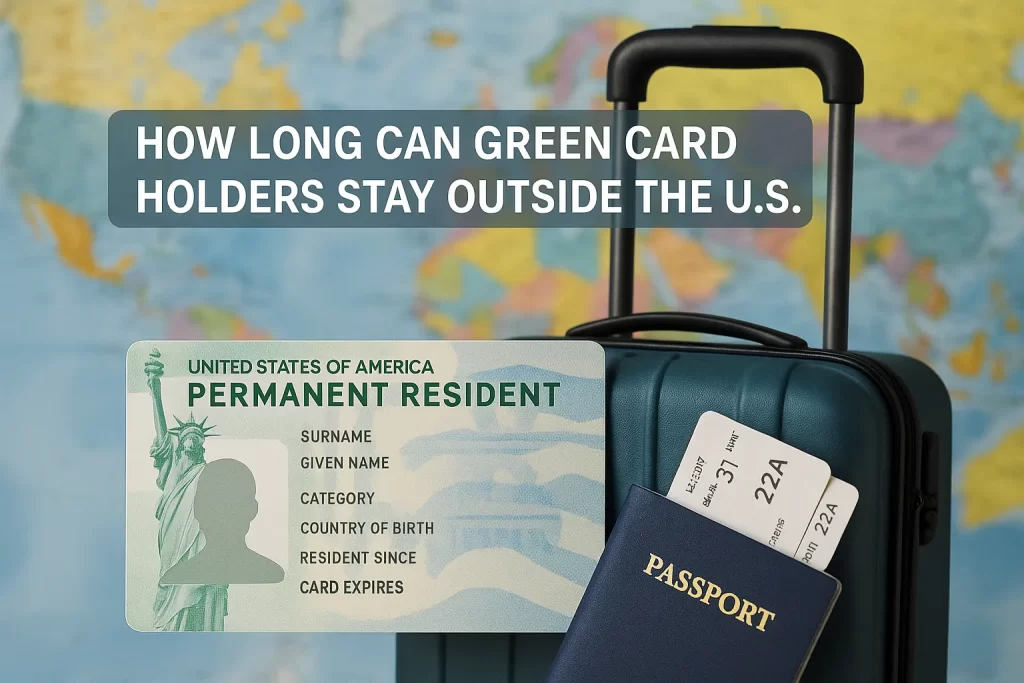
So here’s the million-dollar question: How long can you actually stay outside the U.S. without risking your green card? The answer isn’t as simple as a calendar countdown—but let’s break it down clearly.
🔹 Trips Under 6 Months
If you’re gone for less than 180 days, you’re generally safe. CBP (Customs and Border Protection) considers this a short trip. You won’t usually be questioned heavily, especially if your ties to the U.S. are solid—job, lease, bank account, etc.
That said, don’t get too comfy. If you take frequent trips abroad—even if they’re under 6 months—officers might start wondering if you really live in the U.S. Been there, done that, and yes, I got pulled into secondary inspection. Not fun. 😬
🔹 Trips Over 6 Months
Now you’re in the scrutiny zone. Any absence longer than 180 days but less than a year will raise eyebrows. You’ll face questions like:
- Why were you gone so long?
- Do you still have a home/job/family in the U.S.?
- Are you working abroad?
I once helped a relative prep for her re-entry interview after an 8-month stay abroad. She had solid evidence—lease, paystubs from a remote U.S. job, even Amazon packages delivered to her U.S. address. She made it in just fine. But without those, it could’ve gone south.
🔹 Trips Over 1 Year
This is the danger zone 🚨
If you’re out for more than a year, your green card is considered abandoned—unless you applied for a Re-entry Permit before leaving.
In simple terms: >365 days = you need special permission or risk losing your status.
Even if you return on day 366, CBP can treat you as if you gave up your permanent residency. They might let you in temporarily but refer your case to an immigration judge. Yes, it’s that serious.
🔹 Continuous Residency and Naturalization
Long trips can mess with your timeline for U.S. citizenship. USCIS expects green card holders to have continuous residency. A trip over 6 months could break it. Over a year? You’re starting over.
Bottom line?
Short trips = usually fine. Long trips = proceed with caution.
Always ask yourself: Can I prove I didn’t abandon my life in the U.S.?
📄 Required Documents for Re-Entry
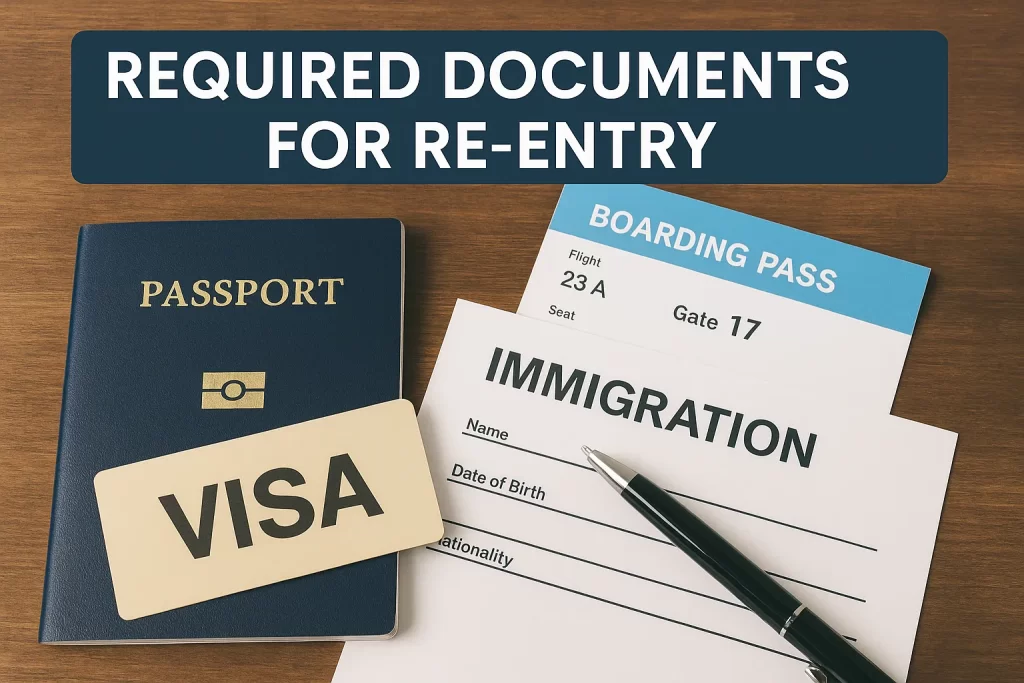
Alright, your flight’s booked and your bags are packed. But before you jet off, make sure you’ve got the right paperwork. Seriously—don’t be that person who gets stuck at the border because you forgot a key document. I’ve seen it happen, and trust me, CBP doesn’t care how tired you are after a long flight.
Here’s what you need in your travel folder (yes, make a folder):
✅ Valid Green Card (Form I-551)
This one’s obvious, but it’s worth repeating: don’t travel without your green card. If it’s expired or expiring soon, renew it before you go. Some airlines won’t even let you board without it.
Also, if your card is lost or stolen while abroad, reentry becomes a bureaucratic mess—you’ll have to go to a U.S. embassy to get a boarding foil (which is slow and expensive).
🛂 Valid Passport from Your Country
Even though you’re a U.S. permanent resident, you still need your foreign passport to travel internationally. Make sure it’s valid for at least 6 months after your return date. Some countries won’t let you in—or out—without that buffer.
📘 Re-entry Permit (Form I-131)
Planning to be gone for more than 6 months? This document is your golden ticket. It proves to CBP that you intended to return and didn’t abandon your residency.
Apply before you leave—because once you’re abroad, it’s too late. And don’t assume you’ll automatically be let back in if you’ve been gone too long.
🔎 Prepare for Secondary Inspection
Even with all your docs in hand, CBP can still refer you to secondary inspection if your trip raises flags. It’s not personal—it’s protocol.
They might ask about your job, lease, taxes, or why you were abroad so long. This is when your proof of U.S. ties becomes your best friend.
📂 Extra Documents That Can Help
- U.S. lease or mortgage statement
- Employment verification letter or pay stubs
- Utility bills
- Tax returns
- School enrollment for you or your kids
- Evidence of family living in the U.S.
Basically, anything that says: “Hey! I still live here. I’m just traveling.”
🌍 What Is a Re-entry Permit and When Do You Need One?

Let’s talk about the re-entry permit—a document that’s way more important than most green card holders realize. I like to call it your “return ticket insurance.” Because if you’re planning a long trip abroad (especially 6 months or more), this little document might be the only thing standing between you and a green card headache. 😬
📘 What Is a Re-entry Permit?
A re-entry permit is a travel document issued by USCIS (Form I-131) that allows permanent residents to stay outside the U.S. for up to 2 years without being presumed to have abandoned their residency.
It doesn’t give you more rights—but it shows U.S. immigration that you intended to come back.
Think of it as a signed hall pass.
⏳ When Do You Need One?
If your trip is going to be longer than 6 months, you should seriously consider applying. Once you hit the 1-year mark abroad without it, you’re almost guaranteed trouble at the border.
I had an uncle who stayed in his home country to help care for his sick mom. He was gone 14 months—no re-entry permit. When he tried to come back, they treated him like a stranger. He had to go through months of hearings just to try to get his status back.
Moral of the story? Plan ahead.
📝 How to Apply (Form I-131)
- You must apply while physically in the U.S.
- Fill out and file Form I-131 with USCIS
- Pay the fee (about $575 as of 2025)
- Wait for your biometrics appointment
- Once approved, you’ll get the permit (looks like a passport booklet)
And yes, it takes time. So don’t wait until your flight’s next week!
🔁 How Long Is It Valid?
Usually 2 years, non-renewable. After it expires, you have to re-enter the U.S. and apply for a new one before leaving again.
❌ What If You Travel Without It?
You can still re-enter—but if you’re gone too long, CBP might think you abandoned your green card. That means:
- You could be denied entry
- Referred to immigration court
- Asked to give up your green card voluntarily
And no one wants to deal with that jetlagged and standing at the border. 😵💫
⚠️ Common Mistakes Green Card Holders Make When Traveling
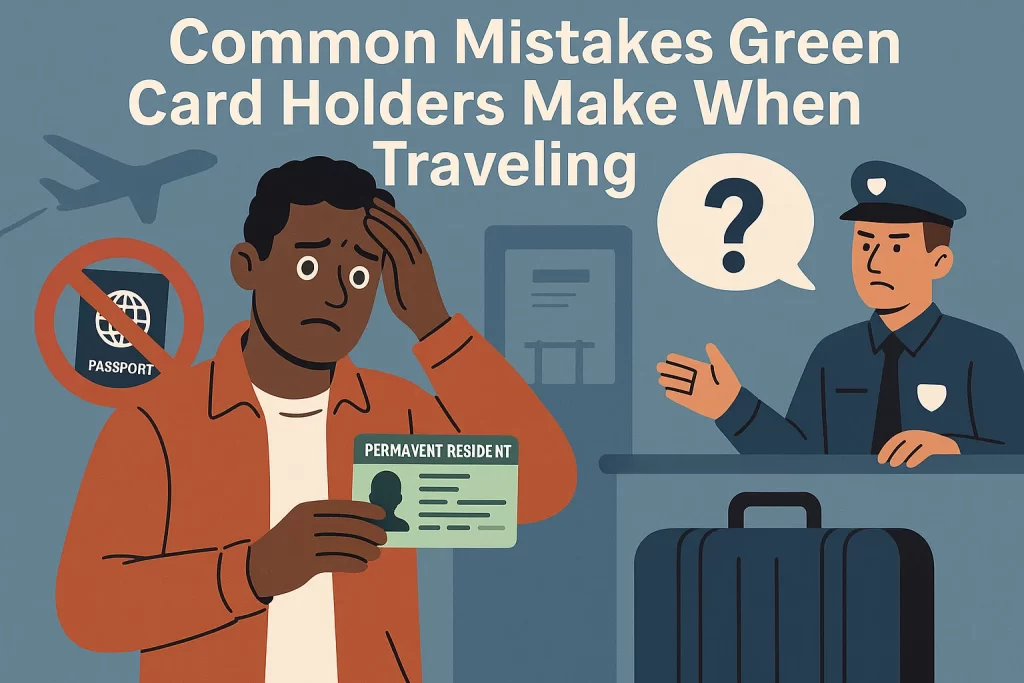
Look, no one wants to think about immigration issues when they’re planning a vacation or a visit home. But green card holders don’t get the same free pass as U.S. citizens—and even a small mistake can have major consequences. I’ve seen people panic at the airport because they didn’t read the fine print. So let’s go over some of the most common slip-ups (and how you can avoid them).
❌ Forgetting to Renew Your Green Card Before Travel
Your green card must be valid for the entire duration of your trip. Some airlines won’t even let you board if it’s expired, and CBP can deny entry if they think you’ve been careless.
💡 Tip: If your green card will expire in the next 6 months, renew it before booking tickets.
❌ Staying Abroad for Over a Year Without a Re-entry Permit
This one’s a biggie. If you’re out for more than 365 days with no re-entry permit, you’ve essentially hit reset on your immigration status. You’ll likely be treated as someone who “abandoned” their U.S. residency.
And no—you can’t just explain it at the airport and hope for mercy. That’s not how it works anymore in 2025.
❌ Not Keeping Strong Ties to the U.S.
Even if your trip is under a year, CBP might question whether you still really live in the U.S.
Things like:
- Closing your U.S. bank account
- Moving out of your U.S. apartment
- No U.S. tax filings
can signal that you’ve relocated permanently.
You don’t have to maintain a mansion, but you do need to show proof you’ve got roots.
❌ Assuming Visa Waiver or Citizenship-Like Privileges
Just because you have a green card doesn’t mean you’re free to come and go like a U.S. citizen.
I’ve had people say, “Well, I thought I had permanent residency.”
Yeah—but “permanent” doesn’t mean unconditional.
You’re still under immigration law, and your travel behavior matters.
❌ Traveling With a Damaged or Lost Green Card
If your card is damaged, unreadable, or missing while you’re abroad, reentry becomes tricky. You’ll likely have to visit a U.S. consulate to get a boarding foil—and that process can take weeks.
Always check your green card’s condition and expiration date before you leave.
👮 Can Green Card Holders Travel While Waiting for U.S. Citizenship?

You’ve filed your N-400 and you’re counting down the days until you can take the oath—congrats! 🙌 But life doesn’t pause just because your naturalization application is pending. What if you need to travel? Can you leave the country without messing up your process?
Short answer: Yes, you can travel—but you’ve got to be careful.
🧾 Travel Is Allowed… With Conditions
USCIS does not prohibit international travel while your citizenship application is being processed. But—and it’s a big but—there are risks.
For example, you must:
- Attend your biometrics appointment (if scheduled)
- Be present for your citizenship interview
- Be physically in the U.S. for the oath ceremony
If you’re abroad and miss any of these, your case could be delayed or even denied.
I knew someone who scheduled a two-week trip and came back to find a missed USCIS interview letter in the mail. She had to reschedule, which added 5 more months to her wait. 😩
⏳ Keep Trips Short and Documented
Even if you’re not yet a citizen, continuous residence still matters. Any trip over 6 months might interrupt that requirement—yes, even after filing the N-400.
That means if USCIS thinks you broke your “residency chain,” they might deny your application, or at least delay it with requests for more evidence.
💡 Tip: Keep copies of travel itineraries, return tickets, and proof of U.S. ties (rent, job, bills) if you’re traveling during this time.
🚫 Avoid Travel Around Interview or Oath Dates
Once your interview is scheduled, don’t risk being out of the country. These appointments are hard to reschedule, and if you miss your oath ceremony, your application might be considered abandoned.
If you absolutely must travel, try to do it right after your biometrics and make sure you’ll be back in time for any mail from USCIS.
🌐 Special Considerations for Refugee or Asylee Green Card Holders
If you got your green card through asylum or refugee status, traveling internationally comes with extra layers of caution. Yes, you’re a lawful permanent resident—but the nature of your original claim can seriously affect your re-entry if you’re not careful.
So before you book that flight, especially to your country of origin, read this section closely. You do not want to end up in front of an immigration judge explaining yourself.
🛑 Can You Visit the Country You Fled From?
Here’s the hard truth: traveling back to the country you claimed persecution from can jeopardize your green card—and your future citizenship.
It can raise serious questions like:
- Were you really in danger when you applied for asylum?
- Has your situation changed?
- Are you abusing the system?
I’ve heard of cases where someone visited their home country for a wedding or funeral and then got flagged during naturalization. USCIS can revoke asylum-based green cards if they believe the original claim was fraudulent or no longer valid.
So unless your circumstances have drastically changed and you’ve had a proper legal review, avoid going back to your country of persecution.
📘 What Travel Document Should You Use?
Refugees and asylees should not use the passport from the country they fled from. Doing so may be seen as “re-availing yourself of protection” from that government.
Instead, you can apply for a Refugee Travel Document using Form I-131.
It’s basically like a passport booklet issued by the U.S. government that allows you to travel internationally while protecting your asylum/refugee status.
💡 Tip: Apply well in advance. It can take months to process.
📌 What If You’re Already a Green Card Holder?
Even if you’ve adjusted status and now have a green card, your original refugee/asylee category still matters—especially during naturalization.
Immigration officials will review your entire history, and inconsistent travel could raise red flags.
They may ask:
- Why did you use your old passport?
- Why did you visit your home country?
- What changed in your persecution claim?
👁️ Final Word for Asylees & Refugees
Be strategic. Be honest. And if you’re unsure, consult an immigration attorney before you travel. A single trip could cost you your green card—or your chance at U.S. citizenship.
📍 Tips for Smooth Re-entry into the U.S.

Okay—you’ve traveled, you’re returning, and you’re holding your breath at immigration. We’ve all been there. Whether you were gone for 10 days or 10 months, re-entering the U.S. as a green card holder can be nerve-racking if you’re not prepared.
Let’s make sure you don’t sweat through your shirt at passport control. 😅
📄 Carry Proof of Strong U.S. Ties
CBP agents want to see that you still live in the U.S.—not just on paper, but in reality. Keep a few key documents in your carry-on:
- U.S. lease agreement or utility bill
- Letter from your employer
- Recent U.S. tax return
- U.S. bank statements
- Driver’s license or state ID
I usually keep a small folder labeled “Re-entry Docs” in my backpack, and it’s saved me more than once.
🔍 Be Prepared for Secondary Inspection
If your trip was long (over 6 months), if you’re a frequent traveler, or if your case looks complex, you may be referred to secondary inspection.
Don’t panic—it doesn’t mean you’re in trouble. It’s just a deeper review.
They may:
- Ask questions about your trip
- Check your documents thoroughly
- Review your travel history
- Ask if you’ve been working or living outside the U.S.
Stay calm, polite, and answer truthfully. Arguing or getting defensive only makes things worse.
🗣️ What CBP Officers Are Trained to Ask
- “Where do you live in the U.S.?”
- “What do you do for work?”
- “Why were you abroad for so long?”
- “Do you have any family in the U.S.?”
These are not just small talk—they’re trying to verify if you’ve maintained your U.S. residence.
💡 Pro tip: Answer clearly and confidently. Having a stack of backup documents helps too.
📞 What If You’re Detained or Denied Entry?
It’s rare—but if things go sideways, know your rights.
- You have the right to request an immigration attorney
- Don’t sign any documents giving up your green card without understanding them
- Ask for a copy of any paperwork CBP gives you
- Call a trusted immigration lawyer ASAP
You worked hard for your green card—don’t let one poorly planned trip put it at risk.
📚 Further Reading: Stay Informed & Prepared
- 🔍 Understanding the I-131 Re-entry Permit Process (USCIS)
A step-by-step guide straight from USCIS on how to apply for and use Form I-131 for re-entry permits and refugee travel documents. - ✈️ CBP Travel FAQs for Lawful Permanent Residents
What CBP officers expect at the border, plus official travel advice and entry policies for green card holders. - 📘 USCIS Guide on Maintaining Permanent Residence
Understand what “abandonment of status” really means and how to avoid it. - 🧾 Continuous Residence and Physical Presence for Naturalization
Learn how long trips can affect your eligibility for U.S. citizenship through naturalization. - 🧳 Travel Tips for Immigrants (ILRC)
Helpful resources from the Immigrant Legal Resource Center about what to do before, during, and after traveling abroad as a green card holder. - 🛑 Traveling with Pending Naturalization (N-400)
Key information for green card holders applying for citizenship who wish to travel internationally during the process. - 🧭 Legal Help: Find an Immigration Attorney (AILA)
Use the American Immigration Lawyers Association’s directory to find a qualified immigration attorney near you if you face any travel-related legal issues. - 🧾 Form AR-11: Change of Address
Don’t forget—if you move, you must update your address with USCIS. This ensures you get travel- and case-related updates.